Creating a Healthier Home, One Choice at a Time

The kitchen is often the heart of the home — where meals are prepared, conversations happen, and daily nourishment begins. It’s also, unfortunately, one of the most common sources of chronic toxin exposure in modern homes.
Reducing toxins in the kitchen isn’t about perfection or fear. It’s about awareness, informed choices, and gradual upgrades that lower your overall toxic load and support long-term health.
This guide will walk you through:
- Why reducing kitchen toxins matters
- What toxins we’re commonly exposed to
- How they affect the human body
- Practical swaps to reduce exposure
- What you can expect after making changes
Why Reduce Toxins in the Kitchen?

Most toxin exposure doesn’t come from one dramatic source — it comes from small, repeated multiple source exposures over time.
Cooking, prepping, storing food and cleaning can introduce substances that:
- Disrupt hormones
- Burden detox pathways
- Contribute to inflammation and chronic health issues
- Impact neurological and immune health
Reducing exposure allows your body to do what it’s already designed to do — regulate, detox, and heal more efficiently.
** Readers also like this related post: The 7 Elimination Pathways Learn how to support your body’s detox pathways! For more wellness content, go to: http://www.ryneandpixie.com

Common Kitchen Toxins & Where They’re Found
Heavy Metals
- Lead & Cadmium – Found in many ceramics, glazes, dishware, glass, and imported cookware
- Aluminum – Found in cookware, countertop appliances, bakeware, foil, some coffee makers
Impact: Neurotoxicity, kidney stress, developmental concerns, hormone disruption
Plastics & Plasticizers
- BPA, BPS, BPF – Used in plastics, linings, food storage
- Phthalates – Found in plastics, fragrances, vinyl
- Microplastics – Released from plastic cookware, plastic drinkware, cutting boards, packaging, food storage
Impact: Endocrine disruption, fertility concerns, metabolic effects
“Forever Chemicals”
- PFAS / PTFE (Teflon) – Found in non-stick cookware, bakeware, air fryers
- Formaldehyde – Found in some cleaning products, paper goods, melamine plates, finishes on cabinets, flooring
Impact: Immune suppression, hormone disruption, liver stress
Other Hidden Sources
- Recycled electronic waste used in plastics (think black plastic utensils)
- Chemical detergents and cleaners
- Synthetic sponges and paper products
The Goal: Reduce Exposure Over Time
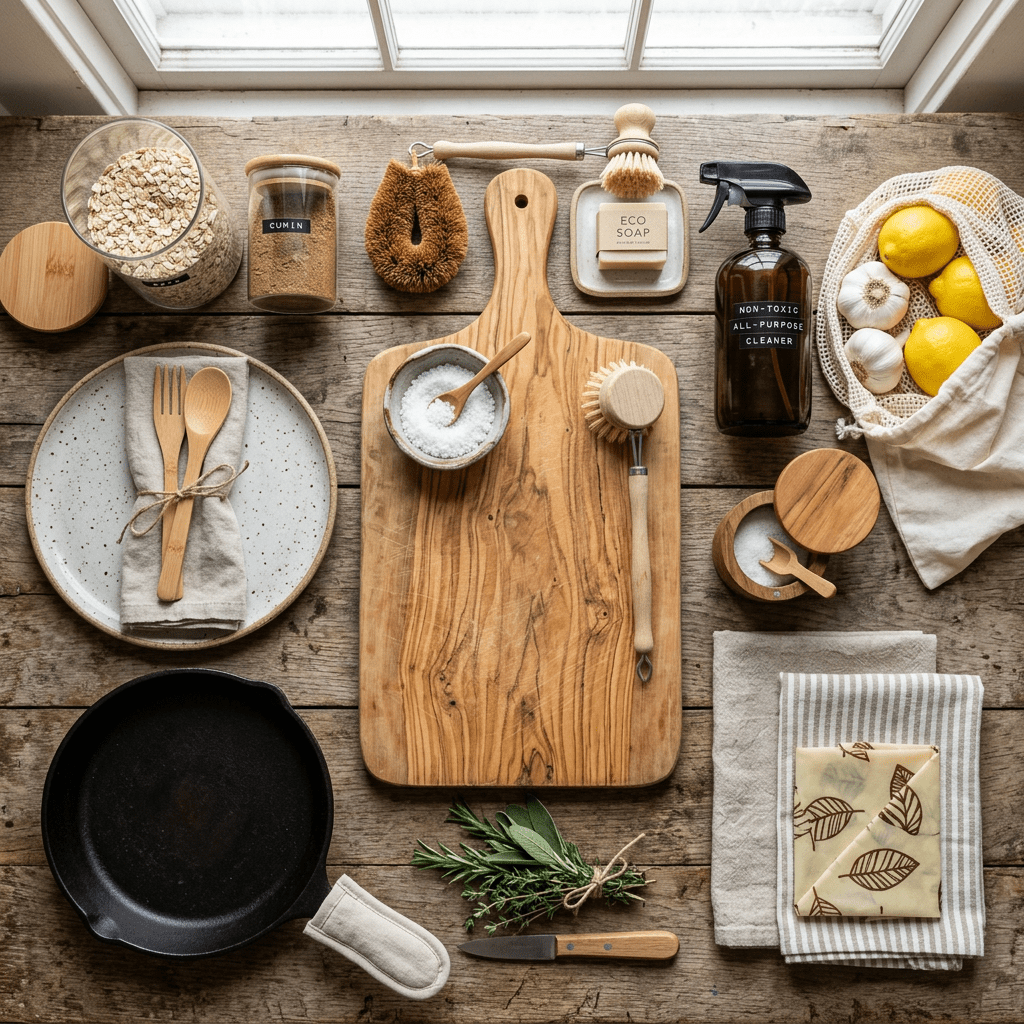
You don’t need to replace everything at once. Each swap lowers cumulative exposure and reduces the burden on your body. Don’t panic. Just slowly (or at a comfortable pace) replace things as you can. Start with the things that you use the most. (that non-stick egg pan you use much of the week that has scratches)
Think progress, not perfection. As I started swapping things in my own kitchen, I realized how difficult it was to find safe options. I had to get very specific in my research due to confusing product marketing practices. If you do your own research, which I recommend, start with one category so you don’t get too overwhelmed. When shopping, look or ask specifically about the common toxins (for example, is there lead in this ceramic glaze? Are these cups made from lead-free and cadmium-free glass?) If the website doesn’t say specifically, consider skipping it or reach out to the company.
After many, many hours of research, and personal switches and use, I have compiled a very comprehensive list of products with links for you to consider in your quest for a toxin-free kitchen space.
*This post contains affiliate links. As an Amazon Associate, I may earn from qualifying purchases. This means that if you click on a link and make a purchase, I may receive a small commission at no additional cost to you. I only recommend products I genuinely love, use or believe will add value to your home and wellness journey. Thank you for supporting my work! Storefront Link Here
Safer Kitchen Swaps (With Trusted Options)
1. Non-Toxic Cookware
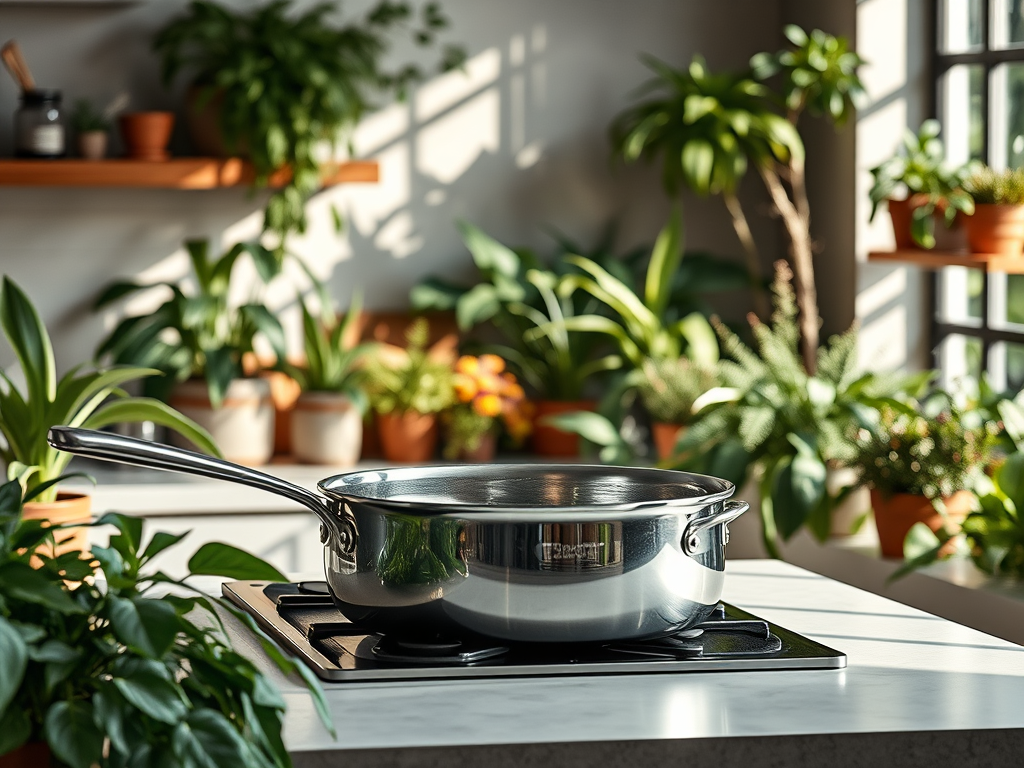
Switch away from traditional non-stick and aluminum toward safer materials: Stainless steel (high quality-this matters), ceramic (be careful of ceramic coated-once they scratch, they should be thrown), cast-iron, carbon steel. I personally use stainless steel and have one durable ceramic-coated over stainless egg pan. Here are some trusted non-toxic options:
- Caraway High-Quality Stainless Steel Cookware Set
- Caraway Non-Toxic Ceramic Cookware Set
- Caraway Enameled Cast Iron Cookware
- Seasoned Blue Carbon Steel Cookware
2. Non-Toxic Drinkware
Switch away from plastic or melamine cups to lead-free and cadmium-free glassware, high quality stainless steel, or lead-free ceramic stoneware. This category bothered me a lot. Even the type of glass you drink out of matters?? (not as obvious as my old plastic cups). A word about Wheat Straw products: unfortunately, while marketed as an earth-friendly product, I found that wheat straw can have issues with plastics and chemicals in the resin. Also, when heated, the product can leach into the digestive system and can cause gluten intolerance issues for some. Use caution. Here are some great drinkware options:

3. Non-Toxic Dinnerware
Surprisingly, much of the dinnerware we eat off of could do with a swap. I had melamine plates (with the cutest pattern) that I tossed immediately after finding out that melamine itself is toxic and made with formaldehyde. I was a little slower to switch my ceramic dinnerware (this felt wasteful for some reason, but needed to be done-low quality and scratched). I broke the plates with a hammer and will repurpose on a mosaic outdoor tabletop. Switch to lead-free ceramic or lead-free glass dinnerware. I use Mikasa and Corelle. The quality of the metal in your flatware matters too. Here are some safe options:
- Mikasa Bone China Dinnerware
- Corelle Lead-Free Dinnerware
- Bloomhouse Ceramic Dinnerware
- Duralex Glass Dinnerware
- Mikasa 65pc Flatware Set Highest Quality Stainless Steel

4. Non-Toxic Cooking Utensils
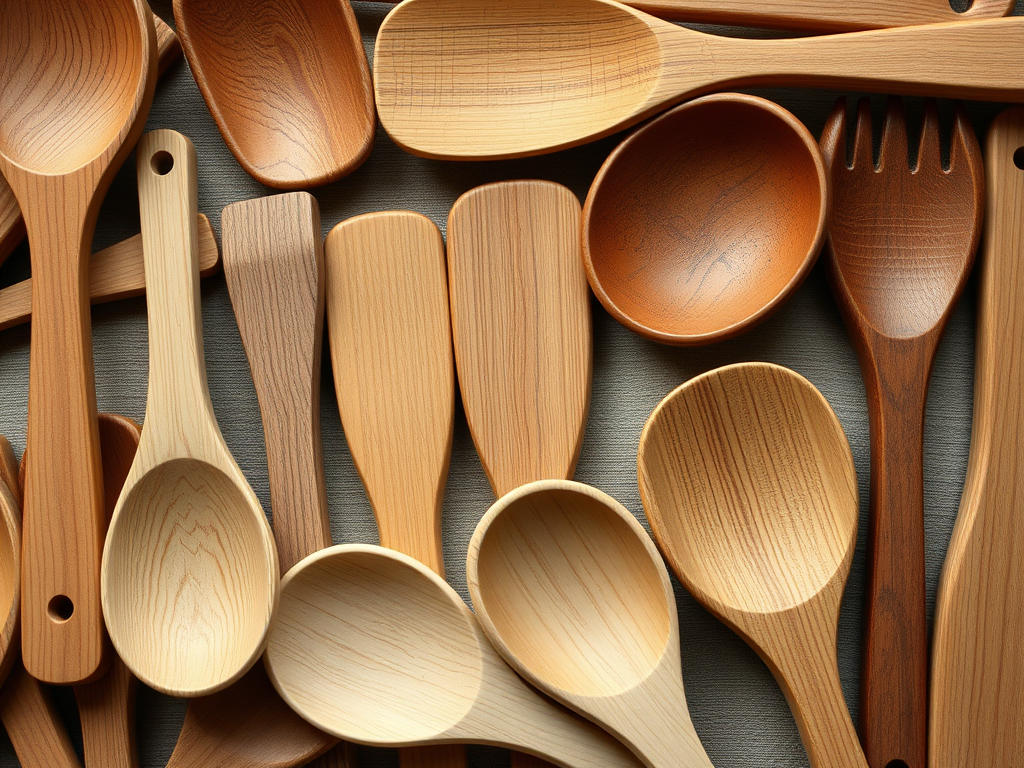
This is a huge area of toxic exposure and it is typically done every day with heat. Start to move away from any plastic utensils to chemical-free (coatings/finishes) wood, high quality (quality matters) stainless steel, and food grade, high heat tolerance silicone rubber. This was actually the first category I started with. It seemed the least daunting. I personally use all of these in my kitchen and love them all. These options are great:
- Teak Wood Utensils
- Stainless Steel Utensil Set
- Platinum Silicone Utensils
- BPA-Free Silicone Spatula 5pc Set
5. Non-Toxic Bakeware
Similar to cookware, with bakeware, switch from aluminum and non-stick to stainless steel and ceramic. Actually, if you do any baking at all, these products are so much better. (truly) It almost made me a little sassy (I’m not really that great of a baker). I use the stainless baking sheets and the ceramic set. Great options here:
- Stainless Steel Baking Sheets
- Caraway Non-Toxic Ceramic Baking Sheets Set of 3
- Caraway Ceramic Bakeware Collection
- Caraway Non-Toxic Ceramic Muffin Pan
- Caraway Non-Toxic Ceramic Rectangle Baking Dish
- Caraway Non-Toxic Ceramic Loaf Pan

6. Non-Toxic Measuring Cups and Spoons
Again, move away from plastics here, to stainless steel, glass, stoneware, and wood. I use stainless and glass. These options are great:
- Stainless Steel Measuring Cups
- Pyrex Glass Measuring Cups
- Acadia Wood Non-Toxic Measuring Cups and spoons
- Food Grade Ceramic Measuring Cups set of 4
- Stainless Steel Mixing Bowls with Silicone Lids Set 10pc

7. Non-Toxic Cutting Boards
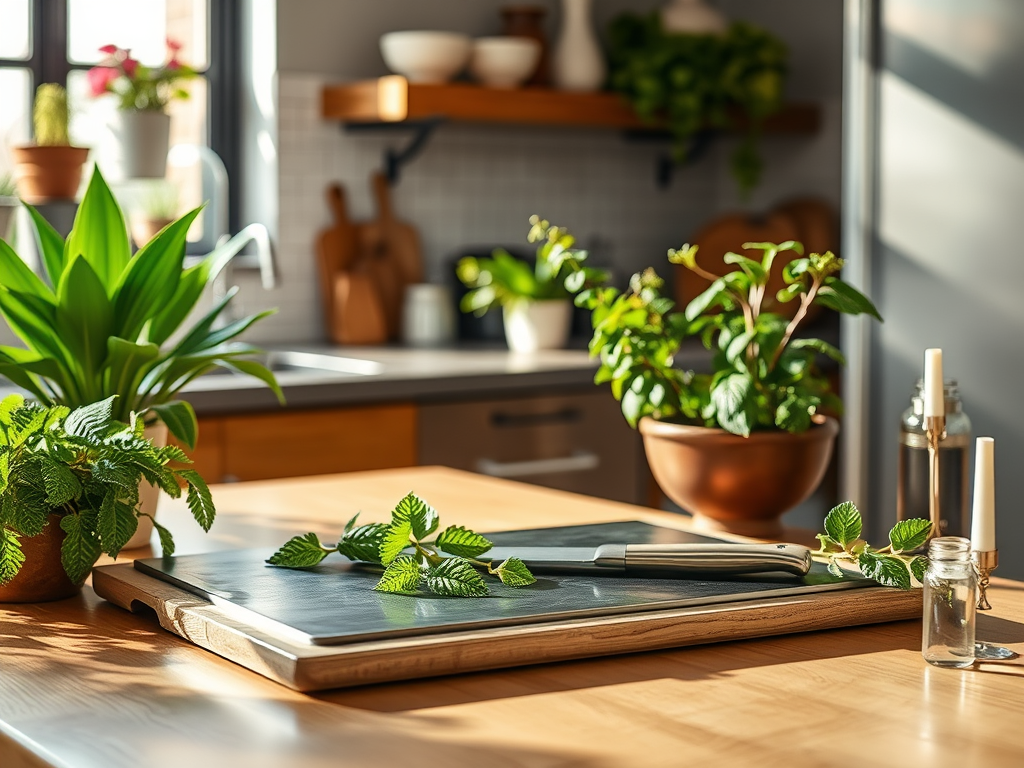
Let’s face it, cutting boards can get gross. If you still use plastic boards, take a good look at the wear. They can be a major source of microplastics. Both plastic and wood can be a source of bacteria growth. Stainless steel or titanium cutting boards are a good hygienic swap for meat prep. When choosing a wood cutting board for your other food prep, choose wood that has been finished with natural products and does not contain any glue or chemicals. I use stainless (meat) and Acadia wood (only for fruits, veggies, and bread). Check out these options:
- Titanium Cutting Board (will not dull knives)
- High Quality Stainless Steel Cutting Board Set
- Wood (Acadia) Cutting Boards (Beeswax Finished)
- Toxin Free Bamboo Cutting Board Set of 3
*Pro tip: To avoid bacteria in your wood cutting boards, wash them immediately with hot, soapy water, sanitize with 3% hydrogen peroxide or white vinegar, and let them air dry completely. Because wood is naturally porous, always seal it with food-safe mineral oil to keep moisture out.
8. Non-Toxic Coffee Machines
I cried when I realized how long I had been drinking coffee that had been ran through a black plastic basket. YEARS. I then decided to get a stainless steel French Press, which is amazing. But then, I started adding up the monthly coffee bill for the “fancy” coffee drinks my family gets and decided to make an investment in an espresso machine. Life. Changing. Paid for itself in under 6 months. The machine I use has stainless steel internal parts and the very small amount of plastic exposure is BPA-free. My drinks have never been so frothy, so delicious! Options here:
- Breville Stainless Steel Espresso Machine
- Surgical Steel French Press
- Glass Pour-Over Coffee Maker
- LuxHaus Moka Pot Stainless Steel Stove Top Coffee Maker
- My Favorite Mold-Free Coffee

9. Water Filtration
Filtering city (tap) water is important to reduce exposure to things like chlorine, lead, pesticides, endocrine disrupters, viruses, and bacteria. This is actually a BIG DEAL. The gold standard of water filtration is reverse osmosis (RO). RO is an advanced water purification technology that forces water through a semi-permeable membrane using pressure to remove contaminants, ions, and molecules. By reversing the natural osmotic process, it separates dissolved salts, minerals, and bacteria, producing purified water. Many people living in cities choose to drink bottled water, most of which is held in plastic containers. It is worth considering filtration options. Full disclosure: I have well water that we have tested yearly, so this has not been an issue for me, for which I am grateful. Below is a top-rated, high-performing, affordable option to check out:
10. Non-Toxic Food Storage
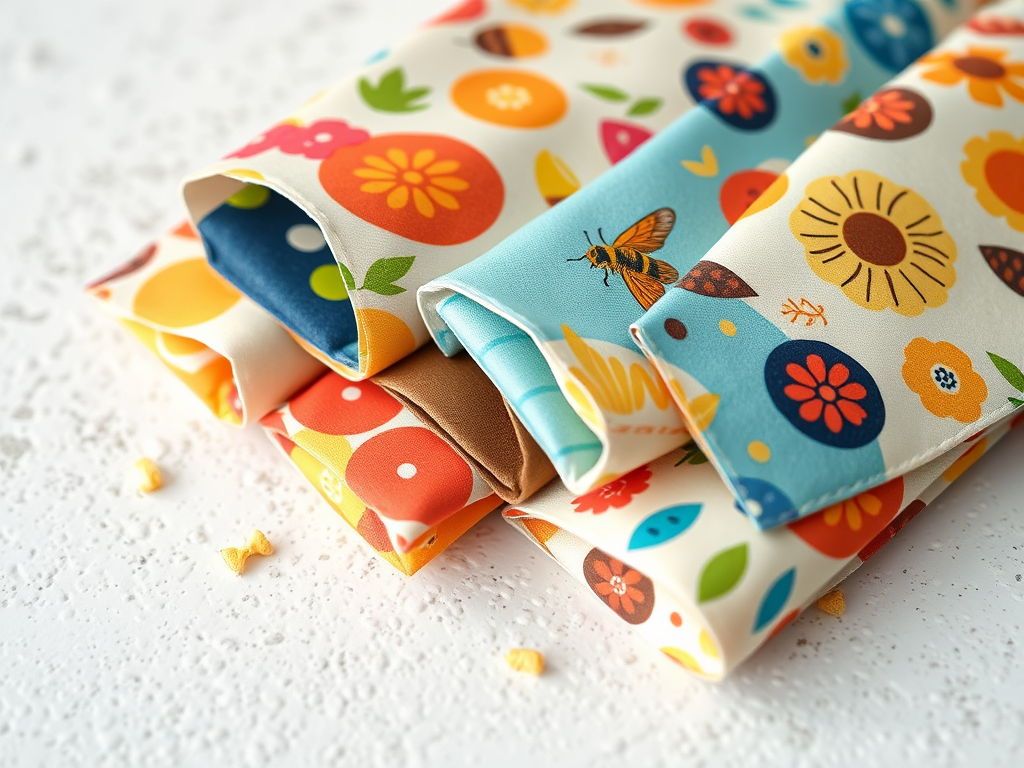
Swap plastic food containers for glass, stainless steel, and silicone. I use glass with silicone because I like to see what is in the container. Here are some useful options:
- Glass & Silicone 8pc Food Storage Containers
- Stainless Steel Food Storage Silicone Lids, 10pc
- Caraway Glass and Silicone food Storage Containers 10pc set
- Reusable Beeswax Wraps
- Reusable 12ct Silicone Storage Bags
- Chemical-Free Unbleached Parchment Paper
11. Safe Appliances
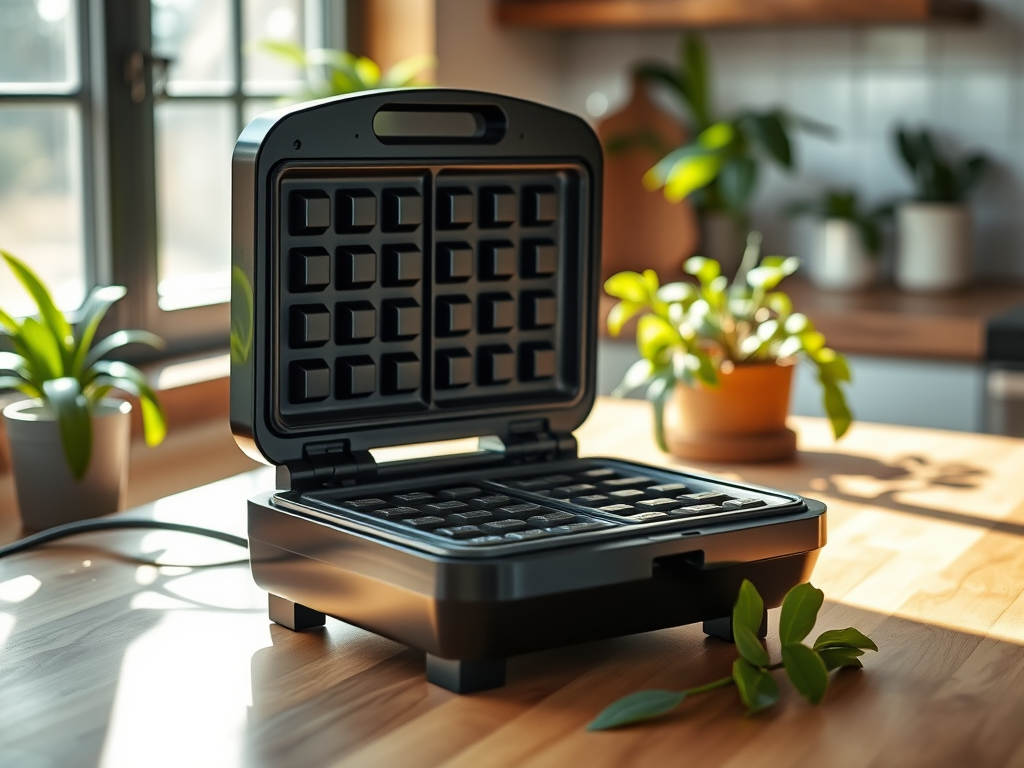
Switch away from countertop appliances with non-stick coatings, plastics, and metals that can leach contaminants like aluminum, lead, and cadmium. (heating elements and cheap coatings) Here are some amazing options my family uses:
12. Natural Cleaning Products
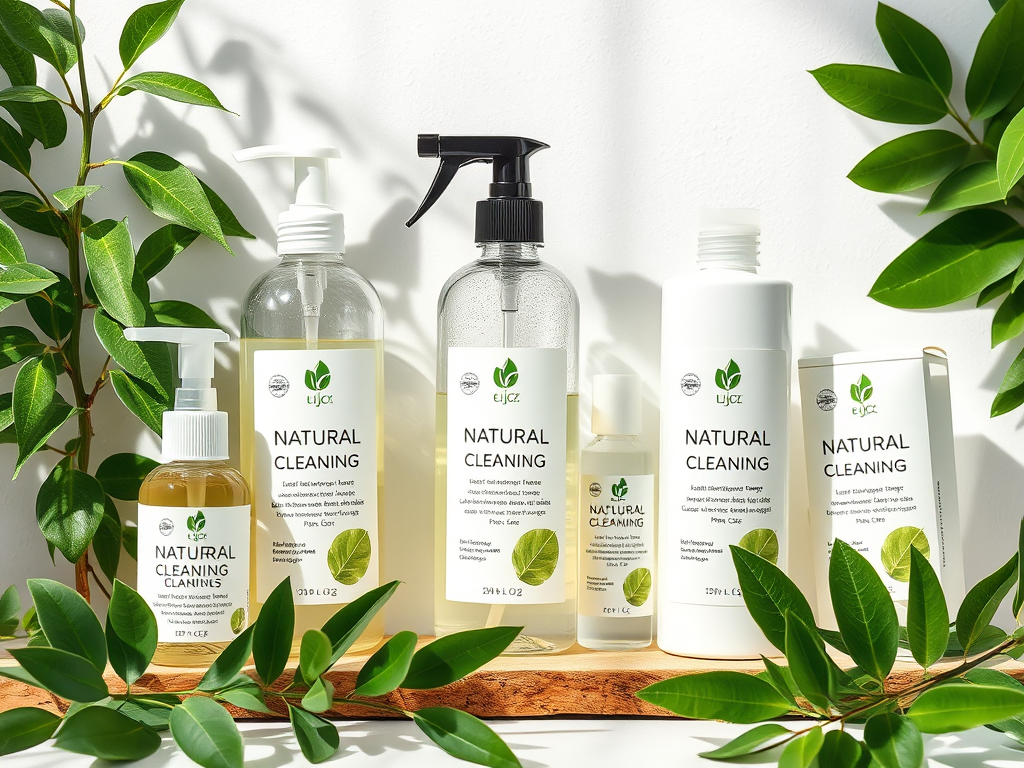
This is an area that is really hard to find TRULY NON-TOXIC products. If you feel inspired, making your own cleaning products with things like baking soda and vinegar, is easy and recipes are abundant online. If you need proven performance and convenience, these are the real deal:
- Attitude EWG-Verified Liquid Dish Soap
- Attitude EWG Verified Non-Toxic Dish Soap Refill
- Blueland Dishwasher Tablets
- Branch Basics Non-Toxic Dishwasher Tablets
- Attitude EWG Verified Non-Toxic Spray Cleaner
- Branch Basics All-Purpose Cleaner
- Force of Nature Disinfecting System
- Mrs. Meyers Non-Toxic Baking Soda Cream Cleanser
13. Towels, Sponges & Paper
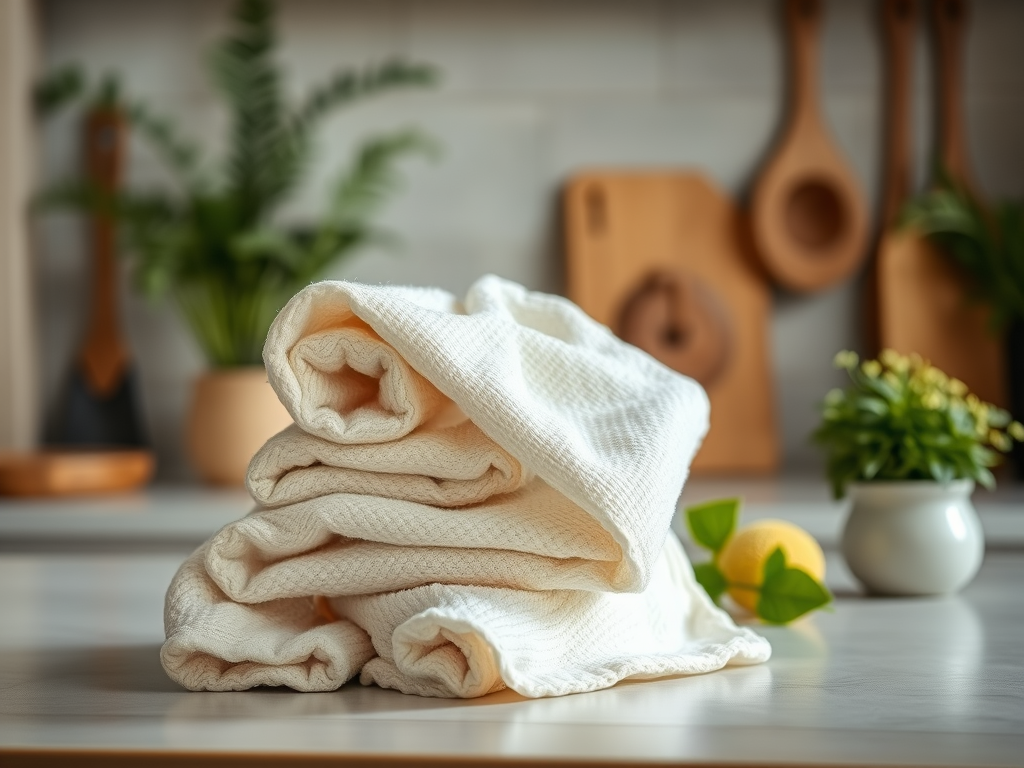
Try for organic, natural fibers, unbleached. I admit, I am a paper-towel-aholic, so I am working on being more aware of my usage and try to use only for really big, gross messes. I also taught myself how to loom knit (super easy/fun) organic cotton scrubbies, so I use those a lot, as well as items below:
- Organic Cotton UnPaper Towels
- Toxin-Free Bamboo Paper Towels 12 Rolls
- Flax Linen Non-Toxic Dish Towels
- 100% Organic Cotton Kitchen Towels Set of 12
- Swedish Dishcloths
- Flax Linen Non-Toxic Wash Cloths
- 100% Organic Cotton Dish Rags
- 100% Natural Sponge Cloths
- Natural Bamboo and Coconut Scrub Brushes
- Coconut and Cellulose Scrubber Dish Sponge Set Of 12
What to Expect After Making These Changes
Making your kitchen space non-toxic leads to significantly reduced exposure to environmental toxins. Many of these changes are an investment not just in products, but your long-term health. Many people notice:
- Reduced headaches or sensitivities
- Improved digestion
- Fewer inflammatory symptoms
- Better hormonal balance
- Reduced allergies
- Improved skin health
- A calmer nervous system
Changes are often subtle but cumulative, supporting long-term health and resilience.
A Gentle Disclaimer
This information is educational and not intended to diagnose or treat medical conditions. Everyone’s body and tolerance level is different. Choose what feels manageable for your life and circumstances.
Final Thought
So many of your health choices are made in your kitchen. Detoxifying this space creates a foundation for health to thrive. Each conscious choice is a vote for your well-being that brings peace of mind.
A healthier kitchen supports a healthier home, a healthier family, a healthier body — and over time, a healthier life. Happy cooking! Happy gathering!








 ryneandpixiehome