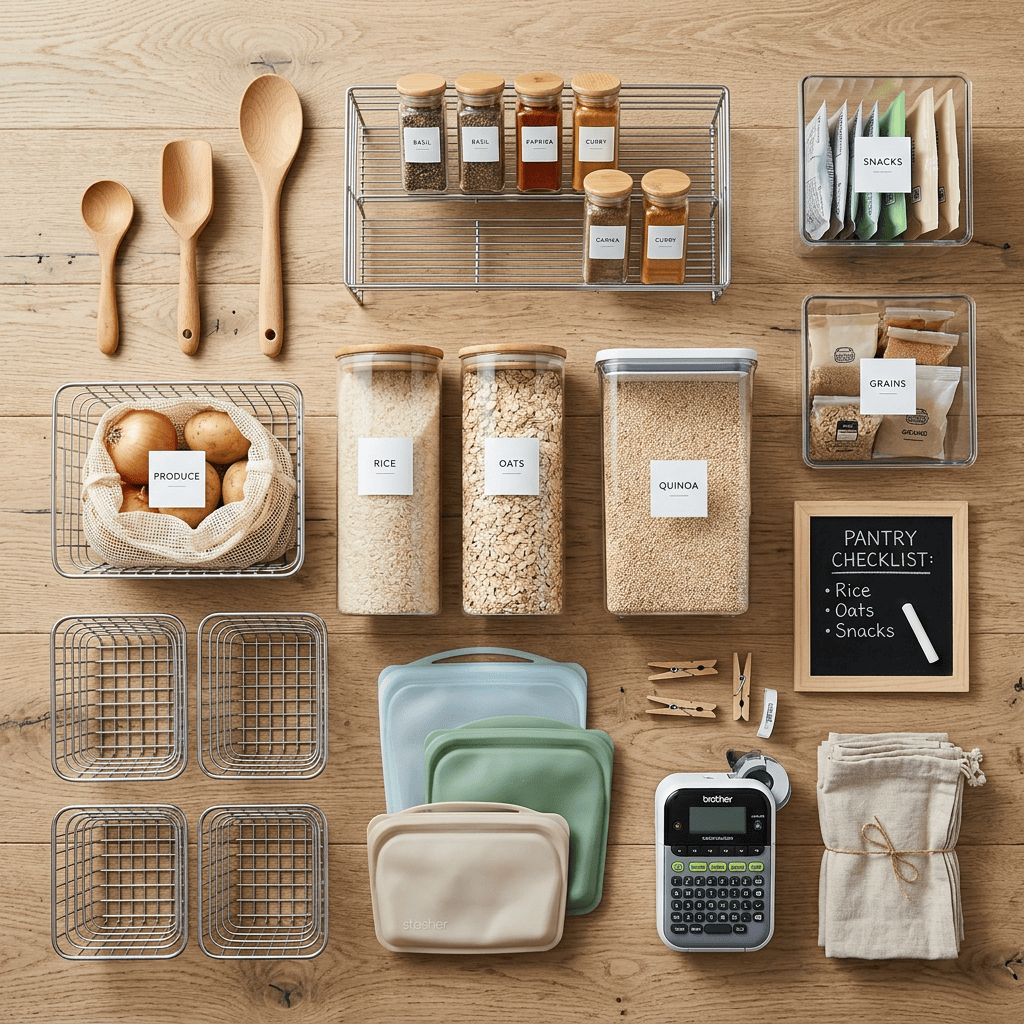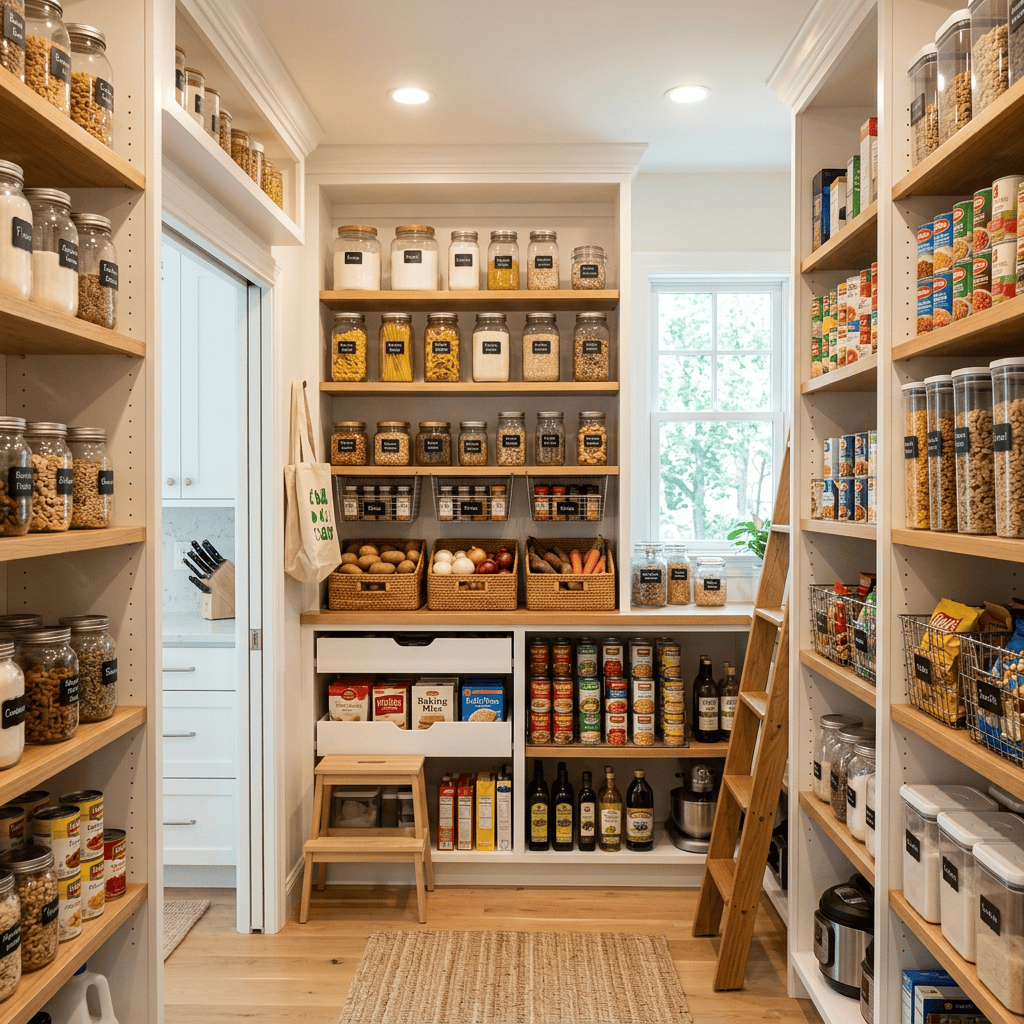
Let’s be honest—not everyone has a Pinterest-worthy walk-in pantry, and that’s perfectly okay.
Whether your “pantry” is an entire room, a tiny closet, or one hardworking kitchen cabinet, the right organization can make your space feel bigger, look cleaner, and help you waste less food. The best part? You don’t need a full kitchen remodel to make a huge difference.
I’ve rounded up 30 pantry organization ideas for three of the most common pantry styles: walk-in pantries, closet pantries, and small cupboard pantries. Mix and match these ideas to create a pantry that works for your family, your routine, and your budget.
Quick Pantry Organization Checklist:
✔ Declutter and toss expired food
✔ Measure your shelves
✔ Group similar items together
✔ Create pantry zones
✔ Label everything
✔ Store everyday items at eye level
✔ Use vertical space
✔ Rotate older food to the front
Before You Organize Your Pantry…
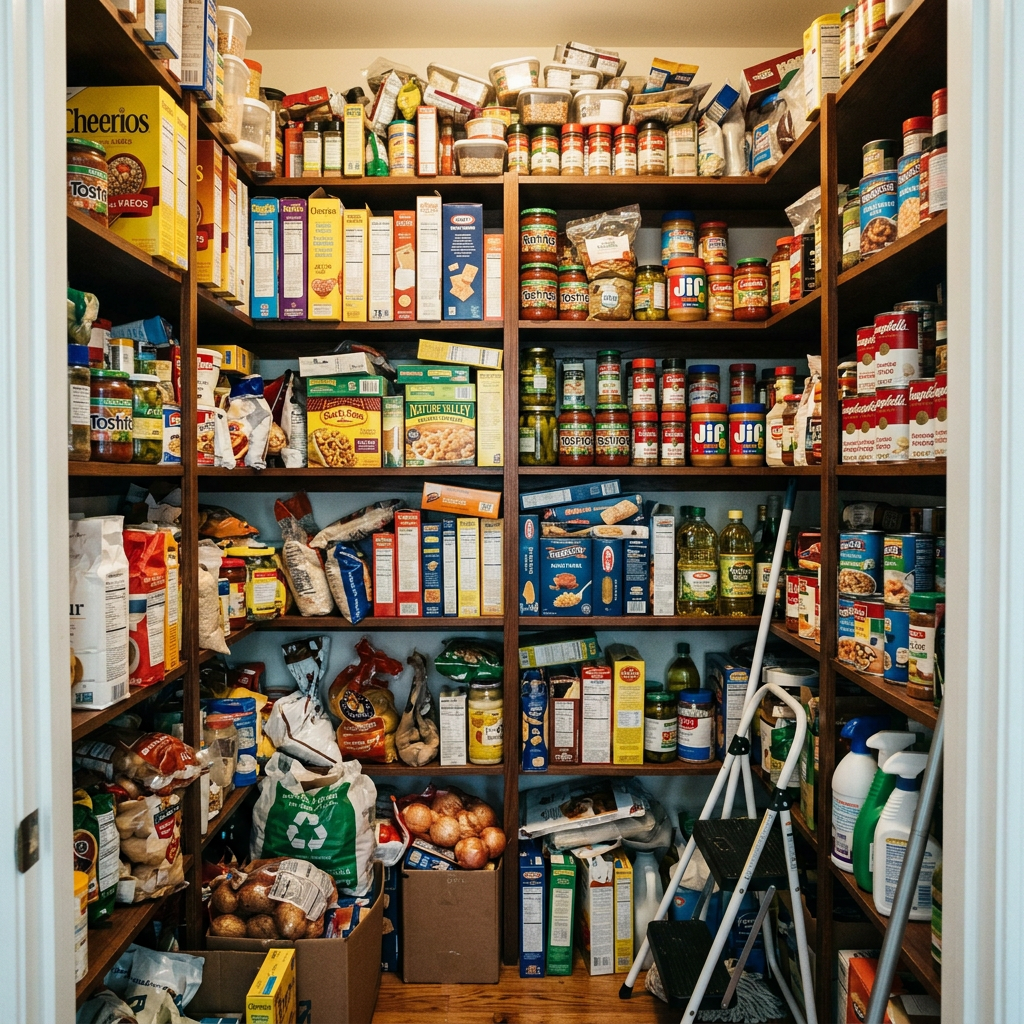
Before you start buying baskets and bins, take a little time to set yourself up for success. A few simple prep steps will help you create a pantry that’s both beautiful and functional—and save you from purchasing organizers you don’t actually need.
1. Empty Everything
Take everything out of your pantry so you can see exactly what you have. It may seem like extra work, but starting with a blank slate makes it much easier to create a system that lasts.
2. Check Expiration Dates
Now is the perfect time to toss expired foods, donate unopened items your family won’t eat, and combine duplicate products. You’ll free up valuable shelf space before you even begin organizing.
3. Clean the Shelves
Wipe down shelves, vacuum out crumbs, and clean sticky containers before putting anything back. Starting with a fresh, clean pantry makes the finished result feel even more rewarding.
4. Group Similar Items Together
Sort foods into categories like baking supplies, canned goods, snacks, breakfast items, pasta, rice, spices, and drinks. You may even want to create activity-based zones for things like school lunches, taco night, or quick breakfasts.
5. Measure Before You Shop
This is the step that’s easiest to skip—but it can save you money. Measure the height, width, and depth of your shelves before ordering bins, turntables, or drawer organizers. A few quick measurements can prevent the frustration of buying organizers that don’t fit.
6. Organize for Your Lifestyle
Pinterest-perfect pantries are beautiful, but the best pantry is one that works for your family. Place everyday foods where they’re easiest to reach, keep kids’ snacks at their level if appropriate, and don’t feel like you have to decant every single item. Build a system that makes your daily routine easier—not one that’s difficult to maintain.
*Pro Tip: Resist the urge to buy organizers before you declutter. Once you know exactly what you’re storing, you’ll be able to choose storage solutions that fit your space instead of trying to make your pantry fit the organizers.
*Many of these organization products are favorites that I’ll be linking in my storefront, so you can easily recreate the look and functionality in your own home. Clever Pantry Organization Storefront Here
*This post contains an affiliate link. As an Amazon Associate, I earn from qualifying purchases. This means that if you click on a link and make a purchase, I may receive a small commission at no additional cost to you. I only recommend products I genuinely love, use, or believe will add value to your home and wellness journey. Thank you for supporting my work!
Walk-In Pantry Organization Ideas
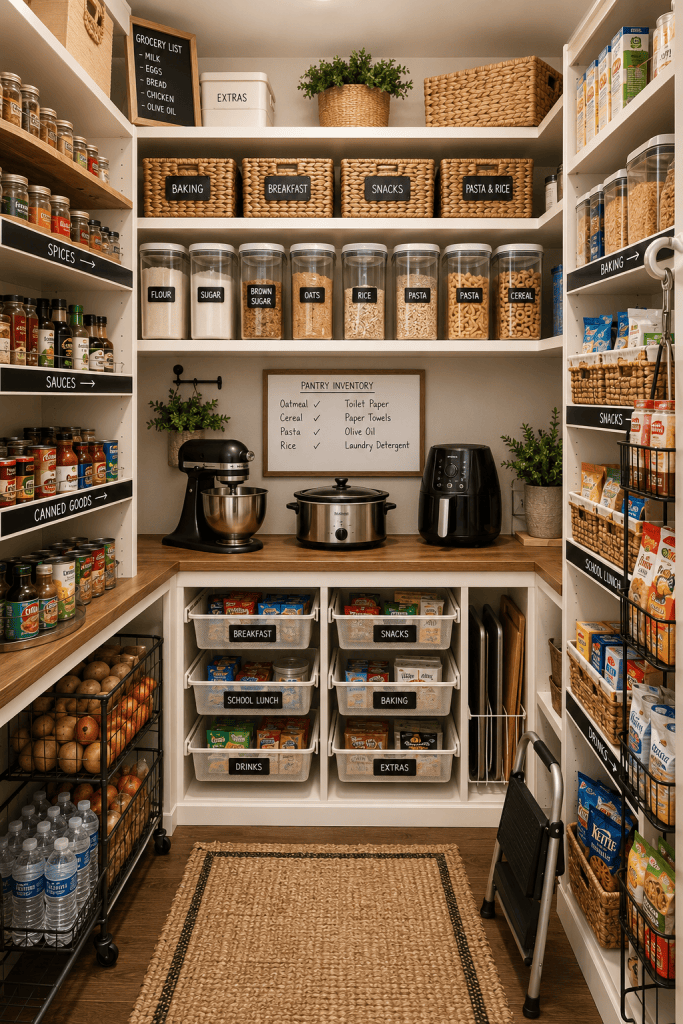
If you’re lucky enough to have a walk-in pantry, the goal isn’t simply filling the shelves—it’s making every inch work smarter.
1. Create Activity Zones
Instead of organizing by food type, organize by what you actually do. Create dedicated stations for baking, school lunches, breakfast, snacks, or weeknight dinners. Everything you need stays together, making meal prep much faster.
2. Add Lazy Susans to Corners
Corner shelves love to hide things forever. Large turntables make oils, sauces, canned goods, and spices easy to reach with one quick spin.
3. Build a Countertop Appliance Zone
Reserve one extra-deep shelf around waist height for bulky appliances like mixers, slow cookers, or air fryers. They’re hidden away but still easy to grab.
4. Store Heavy Items Down Low
Large rolling wire baskets are perfect for potatoes, onions, bottled water, cooking oils, and bulk purchases. Your back will thank you.
5. Decant Dry Goods
Matching glass or clear containers instantly make a pantry feel organized while letting you see exactly when flour, cereal, sugar, or pasta are running low.
6. Use Chalkboard Shelf Labels
Paint the front edge of wooden shelves with chalkboard paint or use removable chalkboard labels so your zones can easily change as your grocery habits do.
7. Double Your Shelf Space
Under-shelf wire baskets make use of the empty air between shelves—perfect for tortillas, napkins, snack bags, or baking supplies.
8. Stock Like a Grocery Store
Place backup items directly behind the one currently being used. When the front item is empty, simply pull the next one forward.
9. Keep a Step Stool Inside
Hang a folding step stool on a wall hook so those top shelves become usable storage instead of wasted space.
10. Hang an Inventory Board
A simple dry-erase board helps everyone remember what needs replacing before the next grocery trip.
*Clever Pantry Organization Storefront Here
Closet Pantry Organization Ideas
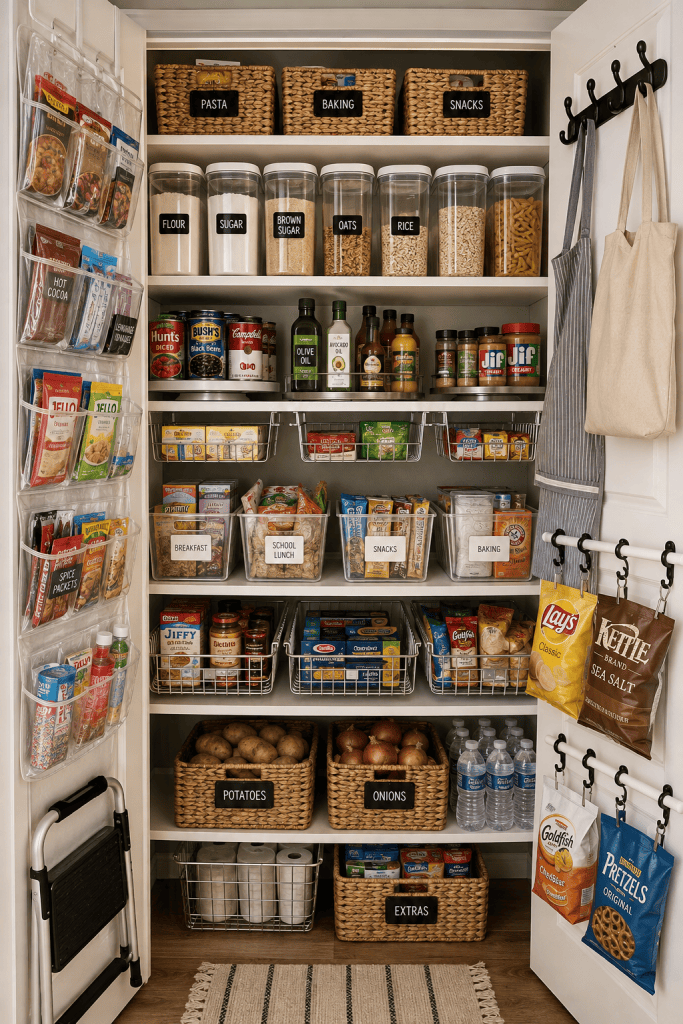
Closet pantries may be narrow, but they can hold an incredible amount with the right storage solutions.
11. Turn Your Door Into Storage
An over-the-door clear pocket organizer isn’t just for shoes. It’s perfect for seasoning packets, drink mixes, snacks, juice boxes, and baking decorations.
12. Organize Wraps with Magazine Holders
Office magazine files turned on their sides create tidy homes for aluminum foil, parchment paper, and plastic wrap.
13. Store Baking Sheets Vertically
Tension rods placed between shelves create custom dividers that keep cutting boards, trays, and baking sheets standing upright.
14. Hang Open Snack Bags
Install a small towel bar on the inside of the pantry door and use curtain ring clips to hang partially opened snack bags.
15. Add Tiered Shelf Risers
Raise the back row of canned goods or spices so nothing gets forgotten behind taller items.
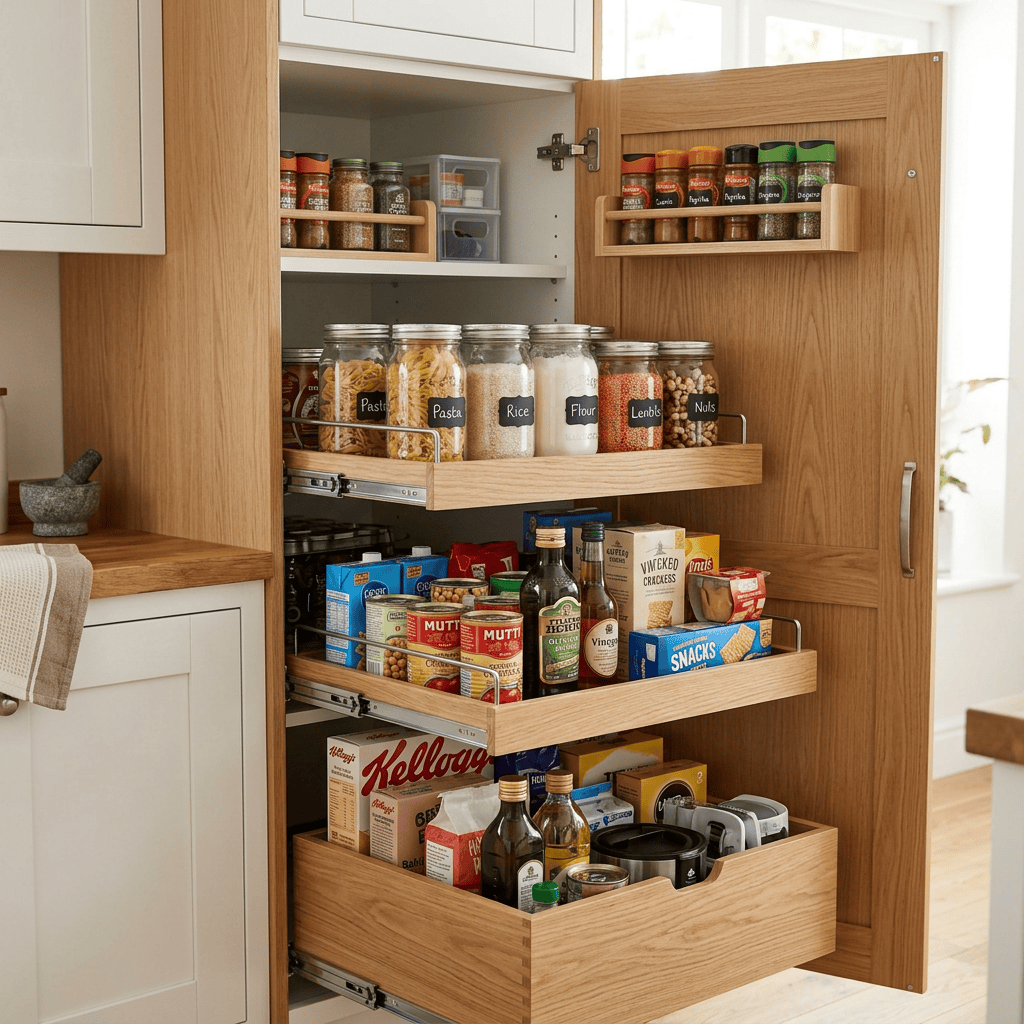
16. Upgrade to Pull-Out Drawers
Sliding wire drawers eliminate the dreaded “black hole” in the back of deep shelves.
17. Simplify with Matching Bins
Uniform storage bins instantly reduce visual clutter while keeping snacks, breakfast foods, or baking supplies grouped together.
18. Use Every Inch of the Door
Command hooks can hold aprons, reusable grocery bags, oven mitts, or measuring cups without taking up shelf space.
19. Label the Shelf—Not the Bin
Label holders attached directly to shelf edges make it easy for everyone to return items where they belong.
20. Give Everyday Foods Prime Real Estate
Store frequently used ingredients between chest and eye level, while seasonal or rarely used items live on the highest and lowest shelves.
*Clever Pantry Organization Storefront Here
Small Cupboard Pantry Organization Ideas
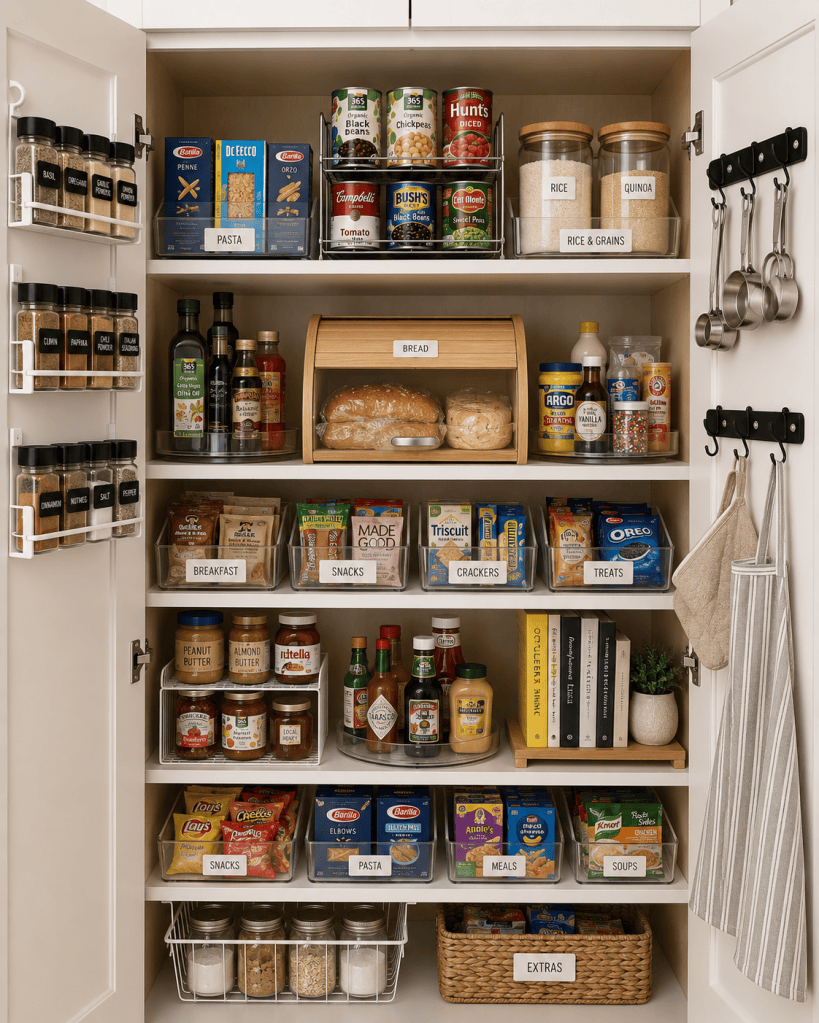
Even a single cabinet can become surprisingly functional with a few smart tricks.
21. Use Pull-Out Acrylic Trays
Deep acrylic trays slide out like drawers, making everything in the back instantly visible.
22. Install Stackable Can Dispensers
Gravity-fed can organizers automatically roll the next can forward, keeping shelves neat while making inventory easy.
23. Add Under-Shelf Jar Storage
Install simple jar tracks beneath shelves to slide mason jars underneath, creating bonus storage without sacrificing shelf space.
24. Mount Spice Shelves on Cabinet Doors
The inside of cabinet doors is valuable real estate. Shallow spice racks keep seasonings visible without cluttering shelves.
25. Try the Bread Box Trick
Store bread, buns, and tortillas inside a dedicated bread box placed within the cabinet to prevent crushed loaves and messy packaging.
26. Spin Your Baking Supplies
A small Lazy Susan makes sprinkles, food coloring, vanilla extract, and decorating supplies easy to access.
27. Create an Instant Half Shelf
A simple horizontal tension rod can divide tall shelves into two useful storage levels without any permanent installation.
28. Set a Snack Limit
Designate one bin for individually packaged snacks. If the bin is full, it’s time to enjoy what you have before buying more.
29. Stack Cookbooks Sideways
Horizontal cookbook stacks create an elevated platform for small jars, oils, or condiments while making use of awkward cabinet height.
30. Add Pegboard to the Back Wall
Pegboard turns unused cabinet walls into adjustable storage for measuring cups, spoons, small baskets, and kitchen tools.
*Clever Pantry Organization Storefront Here
Frequently Asked Questions
What is the best way to organize a pantry?
The best pantry organization system is one you’ll actually maintain. Start by grouping similar items together, then create zones based on how your family uses the kitchen. Keep everyday essentials at eye level, store heavier items on lower shelves, and use clear containers or labels so everything has a designated home.
Should I store pantry food in clear containers?
Clear containers aren’t required, but they can make a huge difference. They reduce visual clutter, help keep dry goods fresher, and let you see when you’re running low on staples like flour, sugar, rice, cereal, and pasta. If you’re on a budget, start with the items you use most often and add more containers over time.
How do I organize a small pantry with very little space?
When space is limited, think vertically. Use door organizers, shelf risers, stackable bins, Lazy Susans, pull-out trays, and under-shelf baskets to maximize every inch. Keeping only what your family regularly uses also helps prevent overcrowding.
What should not be stored in a pantry?
Avoid storing foods that require refrigeration after opening or ingredients that are sensitive to heat and humidity. Items like cooking oils, spices, nuts, and whole-grain flours also last longer when kept away from direct sunlight and excessive heat. Always check the manufacturer’s storage recommendations for specific products.
How often should I reorganize my pantry?
A quick reset once a month is usually enough to keep things under control. Toss expired items, wipe down shelves, combine duplicate products, and move older items to the front so they’re used first. A deeper clean every three to six months helps keep your pantry organized year-round.
Are pantry labels really worth it?
Yes! Labels help everyone in the household know exactly where items belong, making it much easier to keep your pantry organized. Whether you use printed labels, chalkboard labels, or simple handwritten tags, labeling creates a system that’s easy to maintain.
What’s the best way to organize canned goods?
Store canned goods together using shelf risers or stackable can organizers so every label is visible. Keep similar items—such as vegetables, soups, beans, and tomatoes—in their own sections, and place newer cans behind older ones to use the oldest items first.
How can I make my pantry look more organized without spending a lot of money?
You don’t have to buy expensive organizers to create a beautiful pantry. Start by decluttering, matching similar baskets or bins, removing excess packaging, labeling shelves, and using affordable storage solutions from discount stores. Even a few simple changes can make your pantry look cleaner and function much better.
Final Thoughts
The best pantry isn’t necessarily the biggest one—it’s the one that works for your everyday life.
Whether you’re organizing a spacious walk-in pantry, making the most of a narrow closet pantry, or maximizing one small kitchen cupboard, these ideas can help you create a space that’s easier to maintain and far less stressful to use.
Remember, pantry organization doesn’t have to happen all at once. Start with one shelf, one basket, or one storage solution. Small changes add up quickly, and before you know it, your pantry will feel more functional, more organized, and maybe even one of your favorite spaces.
Happy organizing!