The bathroom is one of the first places we visit every morning and one of the last places we spend time before bed. It’s where we prepare ourselves for the outside world, wash away the day, and (hopefully) find a few quiet moments in between.
But for years, I noticed something strange.
I would step into the shower…and instead of relaxing, I felt anxious.
It took me a long time to realize why.
For years, my morning shower had been the place where my brain switched into work mode. Every rushed morning, every stressful commute, every overwhelming day started in that same shower. My body had quietly learned that stepping under the water meant stress was about to begin.
Once I recognized the pattern, I stopped thinking of my bathroom as simply a functional room. Instead, I started asking:
How can this space help my body feel calm instead of overwhelmed?
That question led me to the idea of biophilic design—a design philosophy centered around bringing the calming qualities of nature into our homes. Combined with cleaner materials, better organization, and a few thoughtful upgrades, it completely changed how I experience one of the most-used rooms in my house.
The best part?
You don’t need a luxury renovation or an unlimited budget. Small, intentional changes can make a surprisingly big difference.
What Is Biophilic Design?
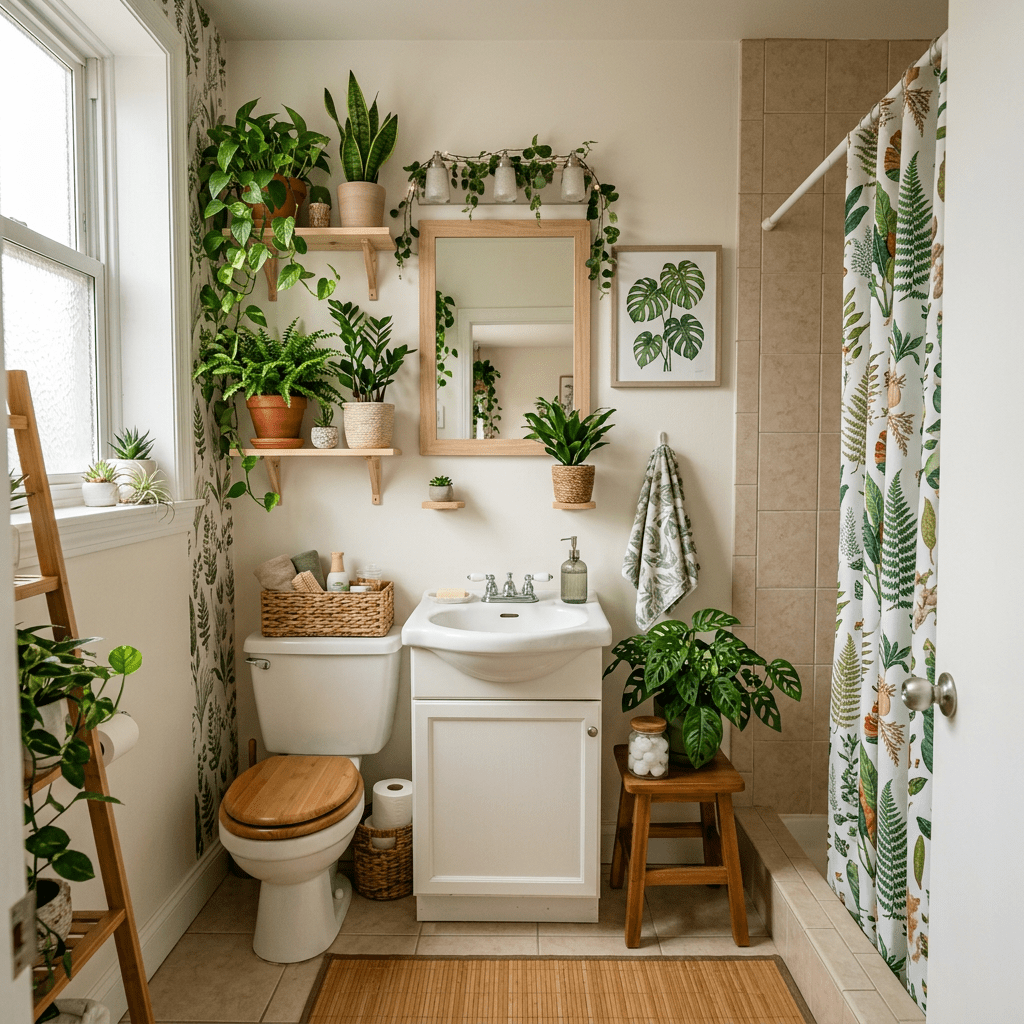
The word biophilic simply means our natural connection to nature.
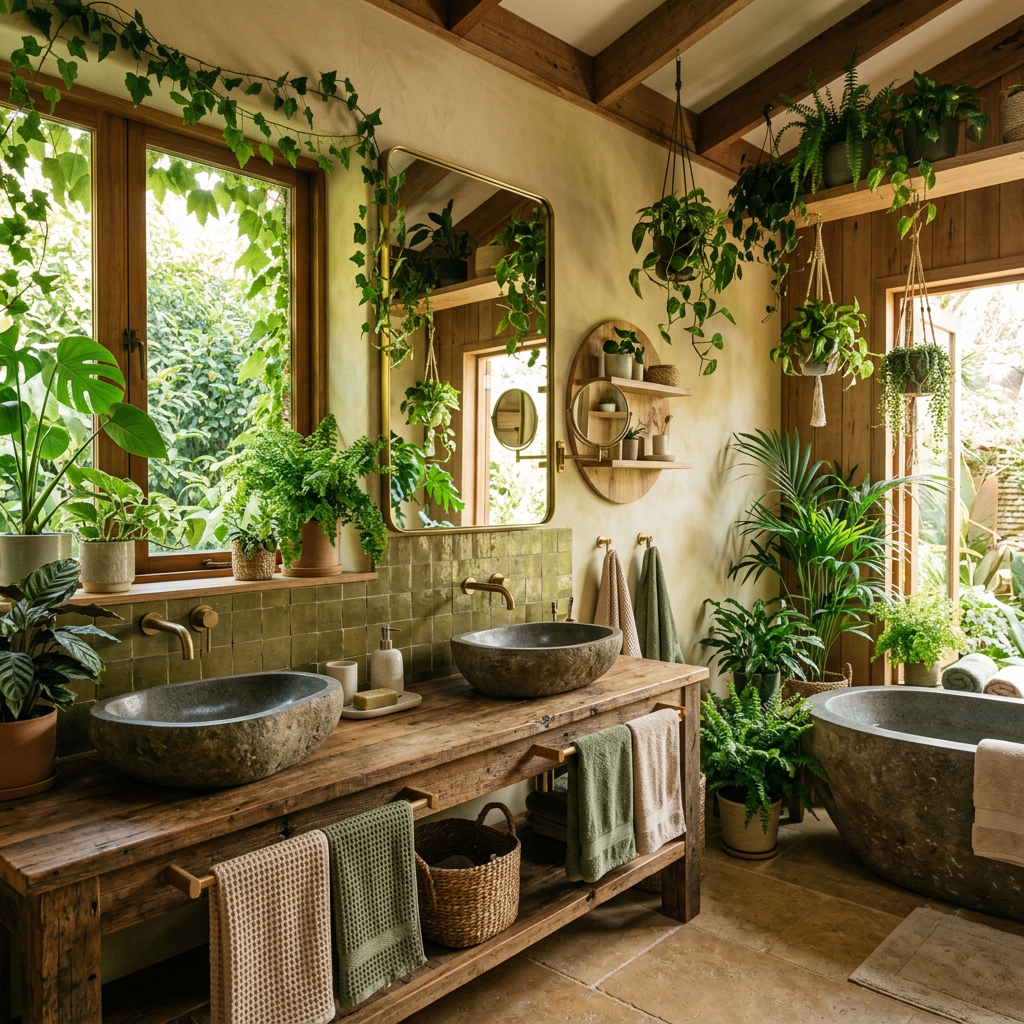
Biophilic design brings elements of the outdoors inside through natural light, organic textures, plants, calming colors, flowing shapes, and sensory experiences that remind us of being outside.
Think less “Pinterest-perfect spa” and more “a room that quietly helps your nervous system exhale.”
When paired with healthier materials and thoughtful organization, your bathroom becomes more than a place to get ready—it becomes a place that supports your physical and mental well-being.
One of my favorite parts of designing a home is finding beautiful, functional pieces that make everyday routines feel a little more intentional.
If you’ve been thinking about creating a healthier, more calming bathroom, I’ve rounded up some of my favorite finds to help you get started. You don’t have to transform your bathroom overnight. Even one thoughtful change can make a difference.These are products I’ve chosen because they align with the ideas of biophilic design—cleaner materials, thoughtful design, practical organization, and simple ways to bring a little more nature into everyday life. I hope these ideas inspire you! Storefront Link Here
*This post contains affiliate links. As an Amazon Associate, I earn from qualifying purchases. This means that if you click on a link and make a purchase, I may receive a small commission at no additional cost to you. I only recommend products I genuinely love, use, or believe will add value to your home and wellness journey. Thank you for supporting my work!
1. Start With Clean Air and Better Water
Bathrooms naturally collect humidity, making good ventilation one of the healthiest investments you can make. (Think mold control)
An effective exhaust fan (or opening a window whenever possible) helps control moisture, discourages mold growth, and keeps the room feeling fresh.
Next, think about your shower.
A shower filter can reduce chlorine and other impurities commonly found in municipal water. Many people also find filtered water gentler on sensitive skin and hair. A filtered shower head combo combines clean water and the sensory experience of a rainfall shower.
If you’ve ever wanted your shower to feel more like a spa, consider layering in simple sensory upgrades:
- A rainfall shower head for a softer, more immersive shower experience
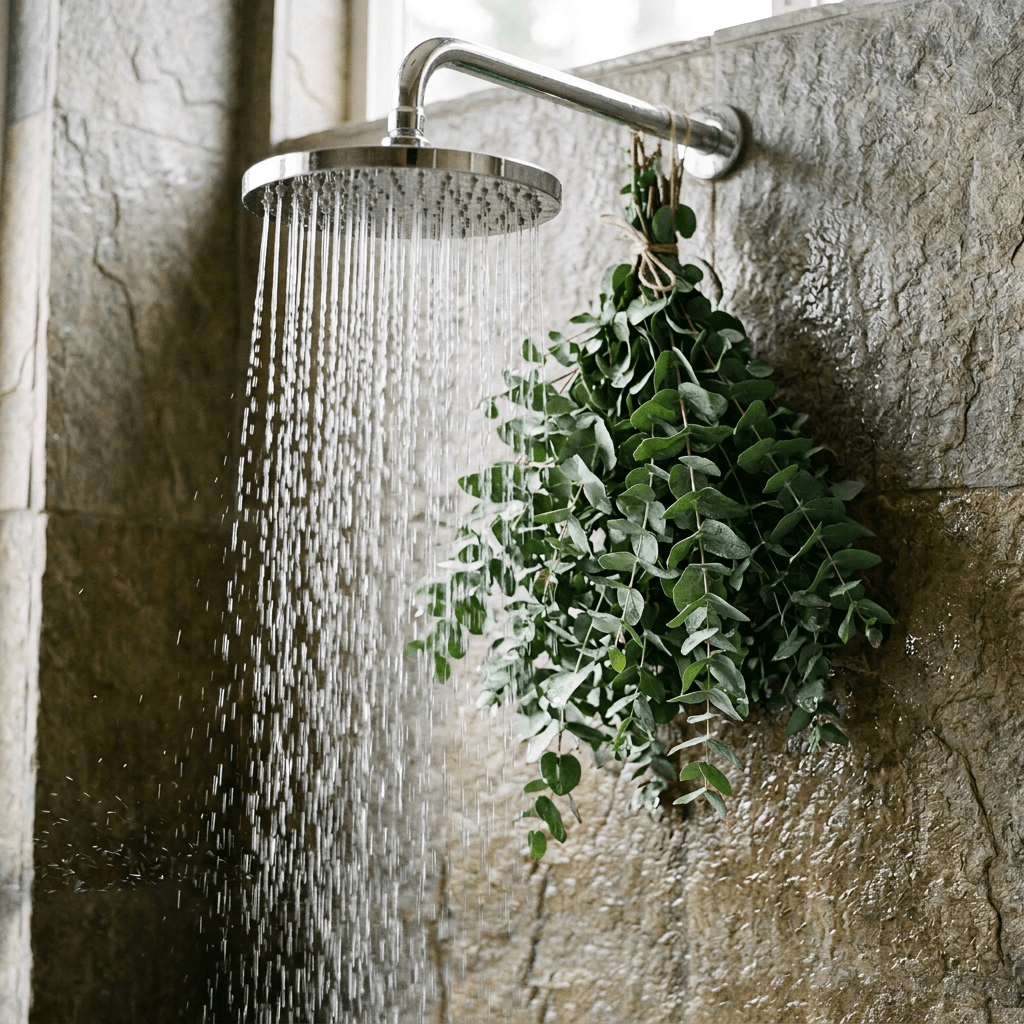
- Fresh eucalyptus hung behind the shower head. Hanging eucalyptus in the shower uses hot steam to release natural essential oils that clear respiratory airways, lower cortisol levels, and instantly transform a daily shower into a stress-reducing aromatherapy ritual.
- A waterproof Bluetooth speaker with calming music or nature sounds
- Waterproof Red Light Therapy Lamp for a therapuetic experience
These ideas aren’t about creating a picture-perfect bathroom—they’re about creating a ritual your body actually looks forward to.
2. Use Natural Materials
Have you ever noticed that strong “new shower curtain smell?”
That’s often caused by chemicals being released from vinyl or PVC products—a process called off-gassing. Heat and steam can make those odors even more noticeable in a small bathroom.
Instead, choose natural materials whenever practical.
Some easy swaps include:
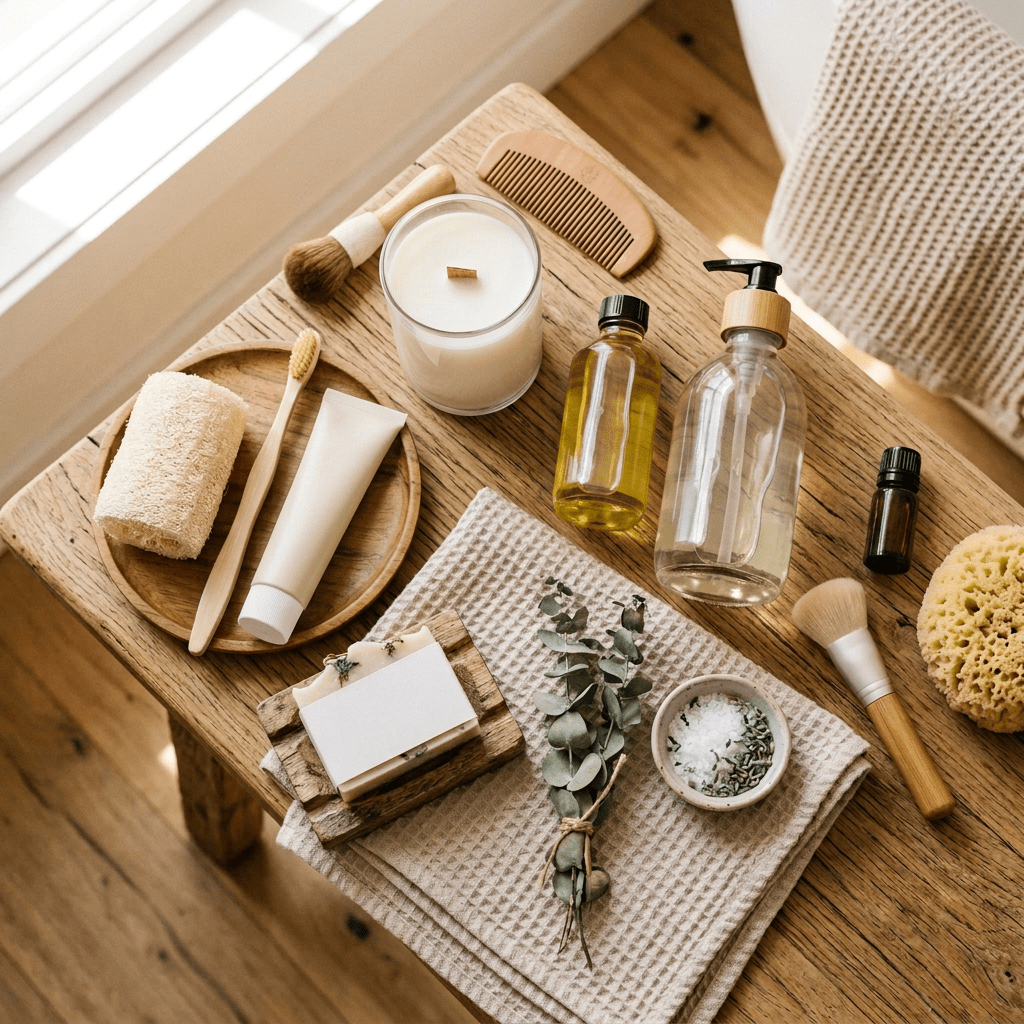
- Cotton, hemp, or linen shower curtains
- Organic cotton towels
- Ceramic or marble soap dishes
- Glass storage containers and accessories
- Wood or bamboo accessories
- Teak shower bench
Need a waterproof liner?
A non-coated PEVA liner is generally considered a better alternative to traditional PVC liners and is an easy budget-friendly upgrade. Or consider this organic cotton liner.
Raw Wood Elements: Replace a soggy fabric bath mat with a roll-up bamboo or teak mat. It adds instant warmth. Use rot-resistant woods like Teak, Hinoki Cypress, or Cedar for bath mats, stool seats, shelving, or vanity accents. These woods release a calming, earthy scent when damp.
*If you are changing bathroom hardware, try “living finishes” like unlacquered brass, copper, or matte black steel. Unlike chrome, which can require harsh chemical cleaners to stay shiny, living metals develop a natural patina over time and embrace the organic beauty of aging.
*If you are repainting, consider Low-VOC Paint (mold-resistant paint rated for bathrooms to limit volatile organic compounds, satin sheen is best).
Take away: Natural materials bring warmth and texture that instantly make a bathroom feel less clinical.
3. Create Calm Through Organization
A cluttered countertop doesn’t just look busy—it can feel busy.
Our brains are constantly processing visual information, and too much “visual noise” can make a room feel stressful before we even realize it.
Instead of filling your bathroom with colorful plastic organizers, simplify.
Try using:
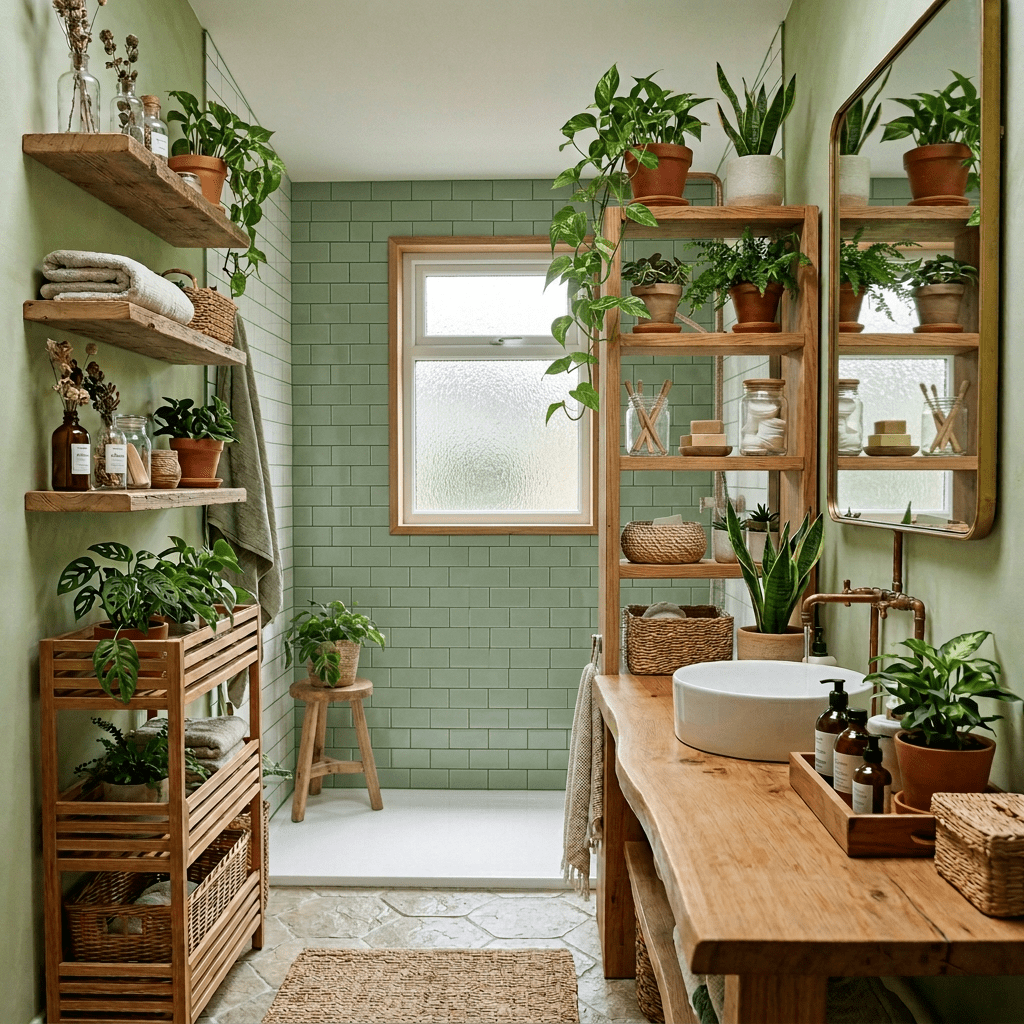
- Woven baskets for extra towels, miscellaneous storage or for toilet paper
- Bamboo drawer organizers
- Wood floating shelves
- Diatomaceous stone trays that dry quickly
- Amber glass pump bottles for soap, shampoo, and conditioner
- No-drill shower shelves
- Covered toothbrush holders to help keep brushes clean
Decanting products into matching containers is one of the simplest changes you can make. It instantly reduces visual clutter while making refills easier and cutting down on plastic waste.
A clean and organized bathroom isn’t about perfection.
It’s about making everyday routines easier.
4. Bring Nature Indoors
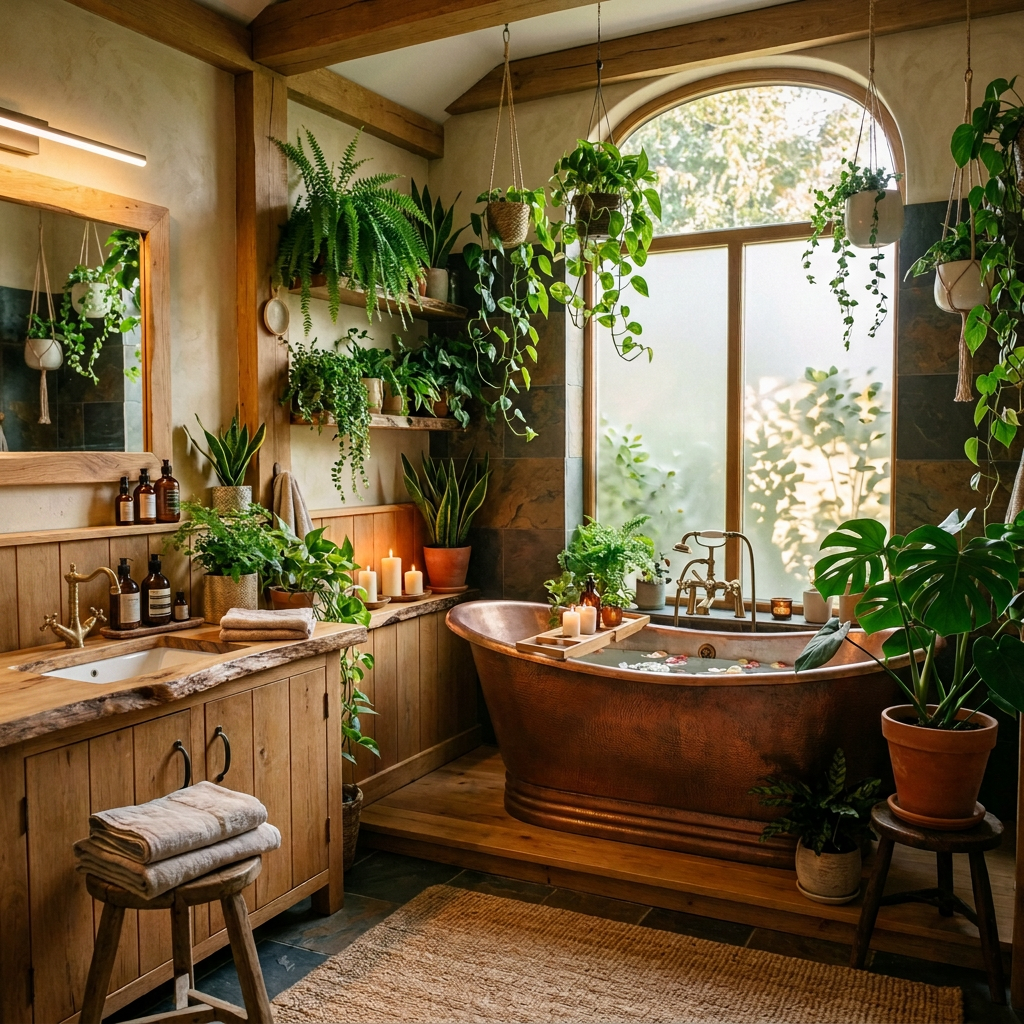
Bathrooms are one of the easiest rooms to add plants because many species actually enjoy humidity.
If you have a window, consider adding:
- Pothos
- Bird’s Nest Fern
- Snake Plant
- Aloe Vera
- Calathea
Even a single plant can soften the room and create a stronger connection to nature. Place on a window sil or consider bathroom plant shelves, or plant boxes to make a “living green wall.”
No windows?
Don’t force it.
A struggling plant won’t bring anyone peace.
Instead, choose high-quality faux greenery, preserved moss art, or dried botanicals. Beautiful natural-inspired décor can still create the calming feeling you’re after.
Nature Aromatherapy Diffuser: Place a small reed diffuser or a passive clay diffuser on a shelf with cedarwood, pine, moss, or lemongrass essential oils to mimic the scent of an outdoor forest.
5. Rethink Your Bathroom Lighting
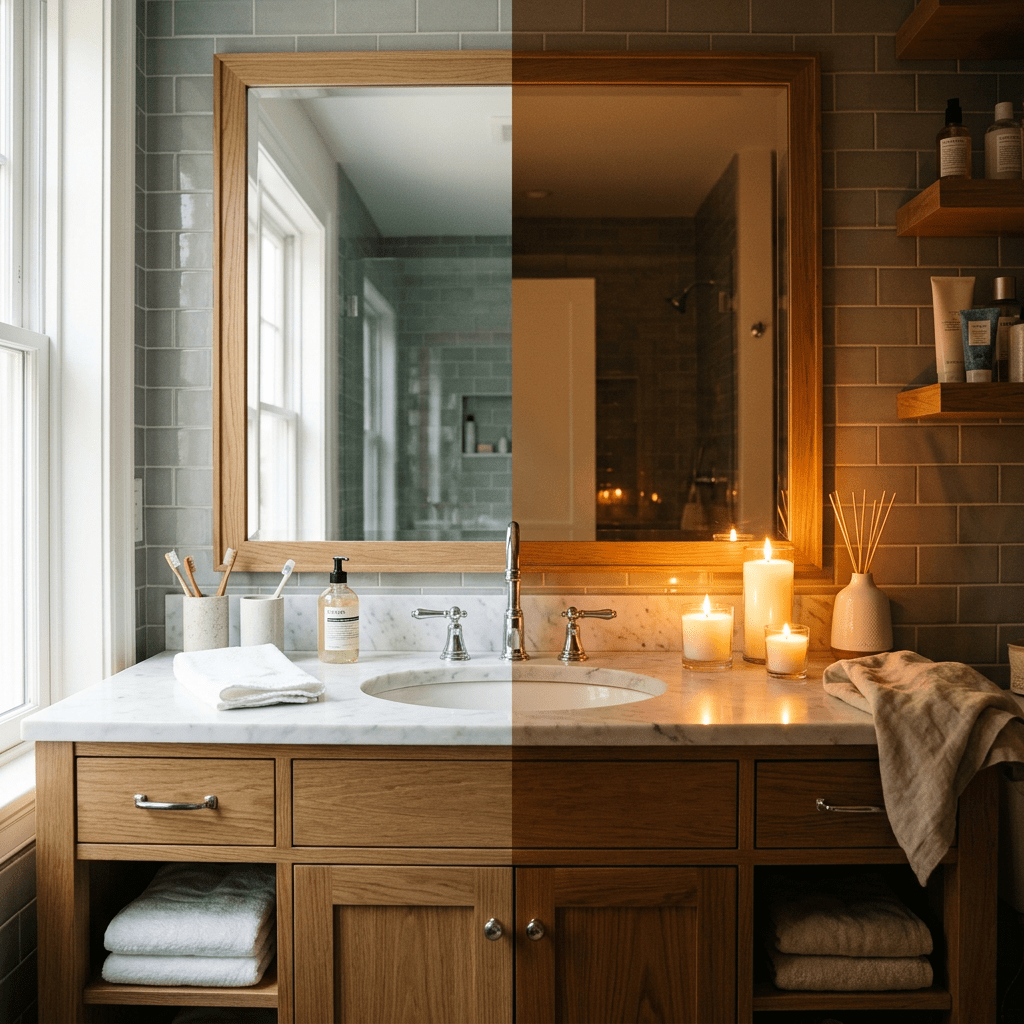
Lighting affects more than how we see ourselves in the mirror.
Bright, cool-toned lighting late at night can make it harder for our bodies to prepare for sleep, while softer warm lighting creates a more relaxing atmosphere.
The absolute best lighting for seeing your skin and doing your makeup is natural daylight, or artificial lighting that precisely mimics it.
Whenever possible:
- Open window coverings during the day to maximize natural light.
- Use warm LED bulbs (around 2700K) in the evening.
- Install dimmer switches if you’re remodeling.
- Light a beeswax candle during an evening bath or shower for an instant spa-like feel.
- Add a small Salt Lamp to soften the room.
One of my favorite habits is simply making my nighttime bathroom routine quieter, dimmer, and slower.
It’s a small change that signals to my brain that the day is ending.
How to Balance Bright Light (day) and Warm Light (night):
To get perfect color accuracy without harsh shadows, follow the “Triple-Nickel” Rule for your vanity bulbs.
–Color Temperature (4800K – 5000K): Often labeled as “Daylight” or “Natural White”. Anything warmer (under 3000K) adds a yellow tint that hides skin blemishes, causing you to overapply your makeup. Anything cooler (over 6000K) washes you out and flattens skin depth.
–Color Rendering Index (95+ CRI): CRI measures how accurately a bulb reveals true color compared to natural sunlight. Look for a CRI of 95 or above so your makeup colors look exactly the same outside as they do in the mirror.
–Cross-Illumination Placement: Never rely solely on a single overhead ceiling light, which casts deep shadows under your eyes, nose, and chin. Instead, place two light fixtures (like sconces) on the left and right sides of your mirror at eye level to wrap your face in even, diffused light.
**At first glance, a bright “daylight” bulb can feel sterile and anti-biophilic. However, biophilic design is actually rooted in matching the natural cycles of the sun (known as circadian rhythms).
By framing your high-utility makeup lighting with natural design elements, you can blend the two seamlessly:
- Implement Circadian Smart Bulbs
- The Concept: Use smart LED lights at the vanity that change color temperature throughout the day, just like the sun.
- The Execution: In the morning, program the bulbs to transition to a crisp 4800K daylight setting for grooming. In the evening, dim them down to a warm, campfire-like 2200K amber glow to trigger your brain’s natural melatonin production and encourage relaxation.
2. Diffuse Light Through Nature-Inspired Textures
- The Concept: Nature rarely has exposed, blinding points of light; sunlight is always diffused by clouds, tree canopies, or atmosphere.
- The Execution: Instead of bare bulbs, shield your vanity lights with frosted white glass, woven rattan shades, or perforated ceramic sconces. This softens the daylight-intensity bulbs, scattering the light evenly across your face while keeping the fixture looking organic and grounded.
3. Build a “Green Frame” Around the Light
- The Concept: Position plant life directly adjacent to your light sources so the illumination mimics sunbeams filtering through a forest.
- The Execution: Place trailing plants like a Pothos or English Ivy on a shelf right above or next to your vanity mirror. Let the vines frame the sides of the glass. When the bright vanity lights switch on, they will bounce beautifully off the green leaves, making the crisp light feel alive rather than clinical.
4. Ground the Vanity in Matte, Organic Textures
- The Concept: Balance the high-tech gleam of a daylight LED mirror by anchoring the surrounding countertop space with heavily textured Earth materials.
- The Execution: Place your makeup brushes in a raw, beige marble cup. Set your daily skincare products on a natural slate tray or a fast-drying diatomaceous earth mat. This rough texture counteracts the smooth glass of the mirror and the brightness of the light.
6. Use Nature as Your Color and Texture Palette
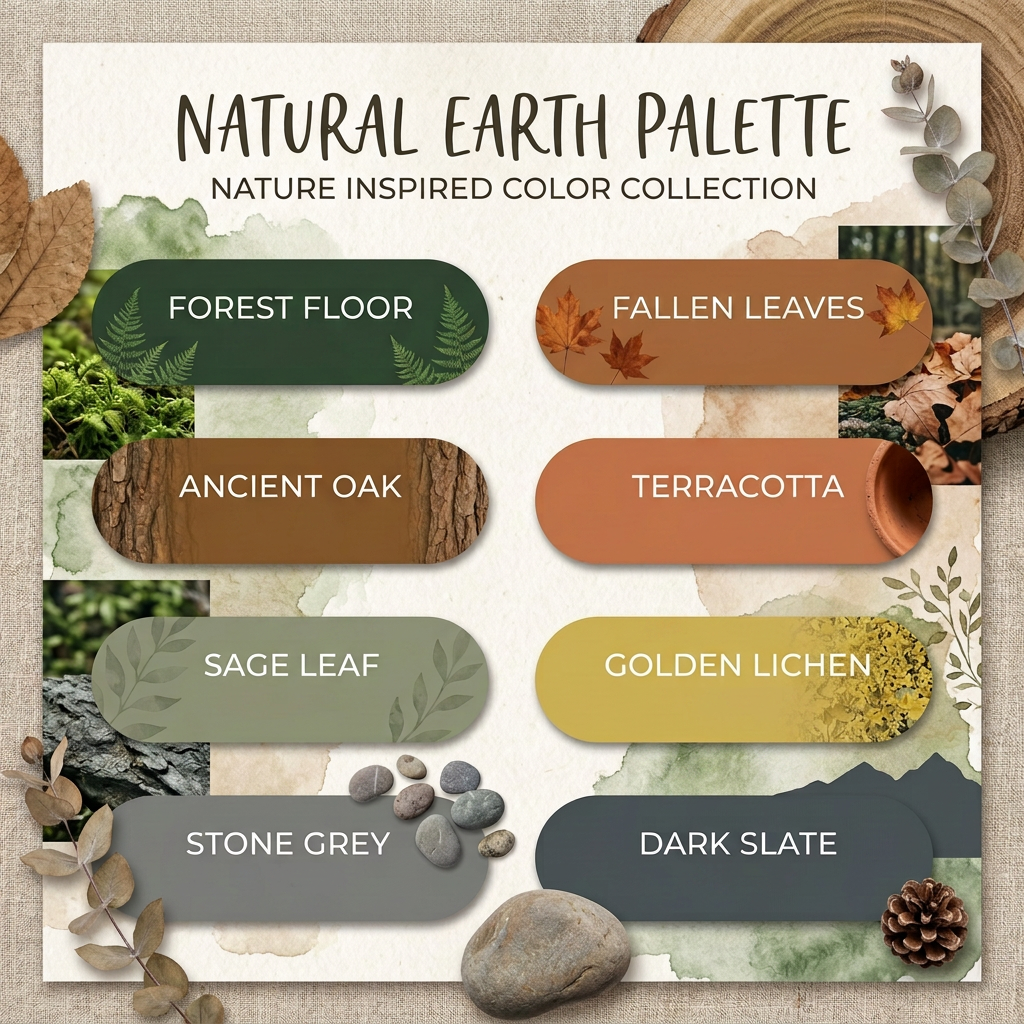
Biophilic design isn’t only about plants.
It’s also about creating spaces that feel like nature.
Instead of harsh whites, cold grays, boxy shapes, and shiny plastic finishes, look toward touches of colors and textures you might find outdoors.
Think:
- Soft sage greens
- Warm sand
- Clay and terracotta
- Weathered wood
- River stone
- Curving shapes
- Natural linen
- Matte ceramics
Layer different textures the same way nature does:
Smooth porcelain.
Waffle-weave towels.
Stone soap dishes.
Wood accents.
Woven baskets.
Stone or wood bath mats.
The result feels collected instead of manufactured—and far more calming.
The Color Psychology of Nature: A palette anchored in nature combined with texture contrasts: “tricks” the brain into a state of outdoor relaxation.
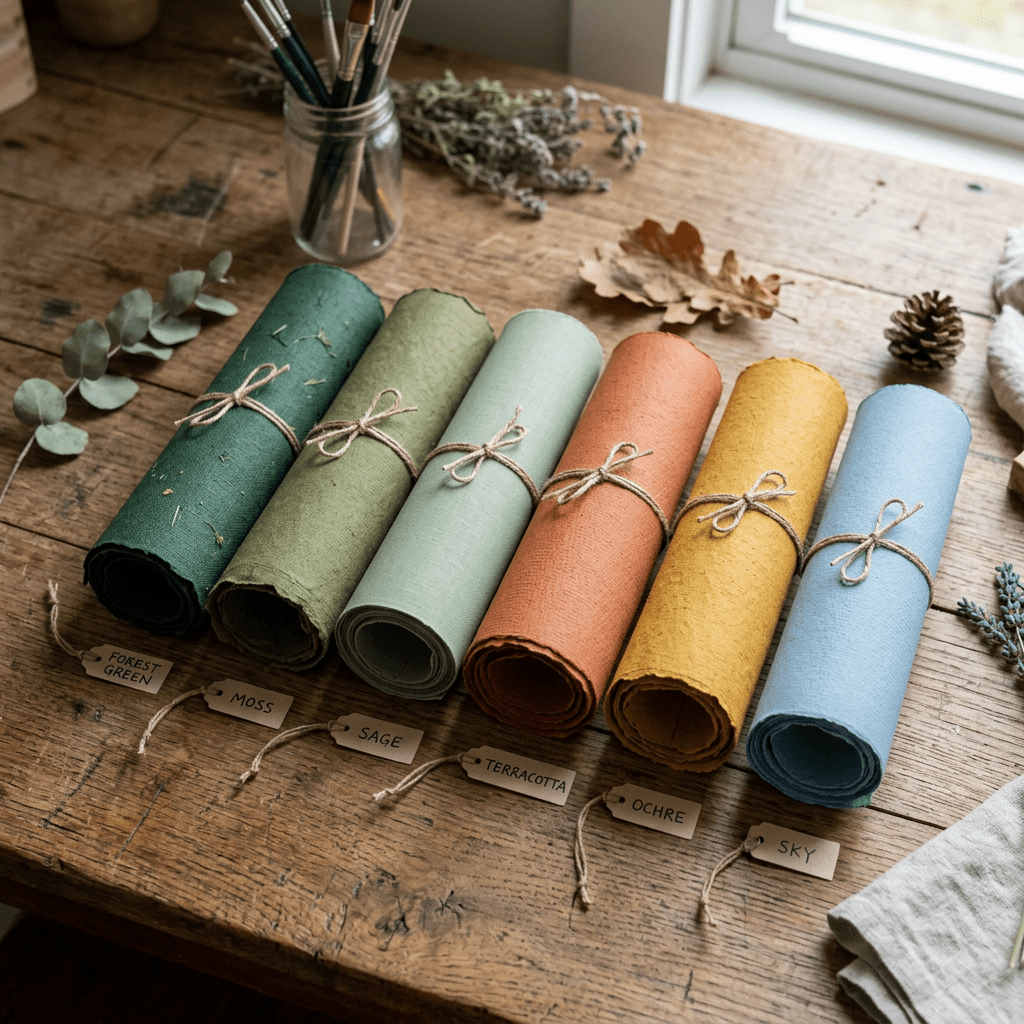
- Calming Botanicals & Oceans: Soft moss greens, sage, or watery blues that mimic forests and rivers, which naturally lower heart rates.
- Grounding Earth Tones: Warm sands, soft terracottas, and muted clay colors that instantly make a space feel warm and safe.
Traditional Bathroom vs. A Biophilic Bathroom
| Traditional Bathroom | Biophilic Bathroom |
|---|---|
| PVC shower curtain | Organic cotton, linen, or hemp curtain with a PEVA liner |
| Plastic organizers | Woven baskets and bamboo organizers |
| Bright plastic bottles | Amber glass refill bottles |
| Harsh white lighting | Warm layered lighting |
| Cold, shiny finishes | Wood, stone, matte ceramics, and natural textures |
| No greenery | Plants or nature-inspired décor |
| Visual clutter | Calm, intentional organization |
You Don’t Have to Change Everything
One of the biggest misconceptions about creating a healthier home is thinking everything has to happen at once.
It doesn’t.
Start with one change.
Maybe it’s replacing a vinyl shower curtain.
Maybe it’s adding a plant.
Maybe it’s hanging fresh eucalyptus or finally organizing your countertop.
Each small improvement builds on the next.
Over time, your bathroom becomes more than a place to brush your teeth or rush through a shower.
It becomes a space that helps you slow down, breathe a little deeper, and begin or end your day with intention.
That’s what I want Ryne and Pixie Home to be about—not perfection, but creating homes that quietly support healthier, calmer living.
Your Healthy Bathroom Checklist:
✓ Good ventilation
✓ Filtered shower water
✓ Natural, low-tox materials
✓ Organized surfaces
✓ Greenery (real or faux)
✓ Warm, calming lighting
✓ Nature-inspired colors
✓ Layered organic textures
Because sometimes the healthiest changes aren’t the biggest renovations.
They’re the small, thoughtful choices we make every single day.