Tag: home organization

  • 30 Pantry Organization Ideas That Actually Work (For Every Pantry Size)

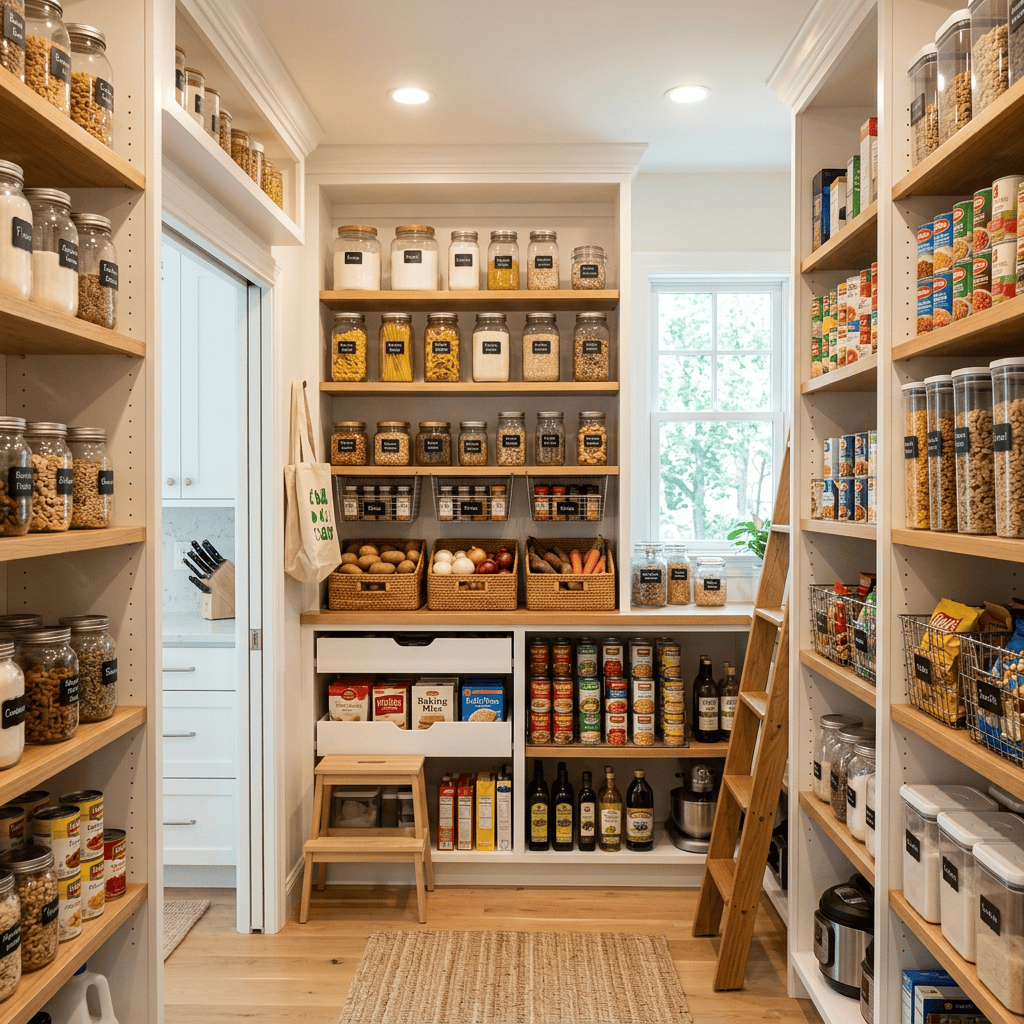
    Kitchen pantry with shelves of labeled jars, baskets of vegetables, canned goods, and bottles.

    Let’s be honest—not everyone has a Pinterest-worthy walk-in pantry, and that’s perfectly okay.

    Whether your “pantry” is an entire room, a tiny closet, or one hardworking kitchen cabinet, the right organization can make your space feel bigger, look cleaner, and help you waste less food. The best part? You don’t need a full kitchen remodel to make a huge difference.

    I’ve rounded up 30 pantry organization ideas for three of the most common pantry styles: walk-in pantries, closet pantries, and small cupboard pantries. Mix and match these ideas to create a pantry that works for your family, your routine, and your budget.


    Quick Pantry Organization Checklist:

    ✔ Declutter and toss expired food

    ✔ Measure your shelves

    ✔ Group similar items together

    ✔ Create pantry zones

    ✔ Label everything

    ✔ Store everyday items at eye level

    ✔ Use vertical space

    ✔ Rotate older food to the front


    Before You Organize Your Pantry…
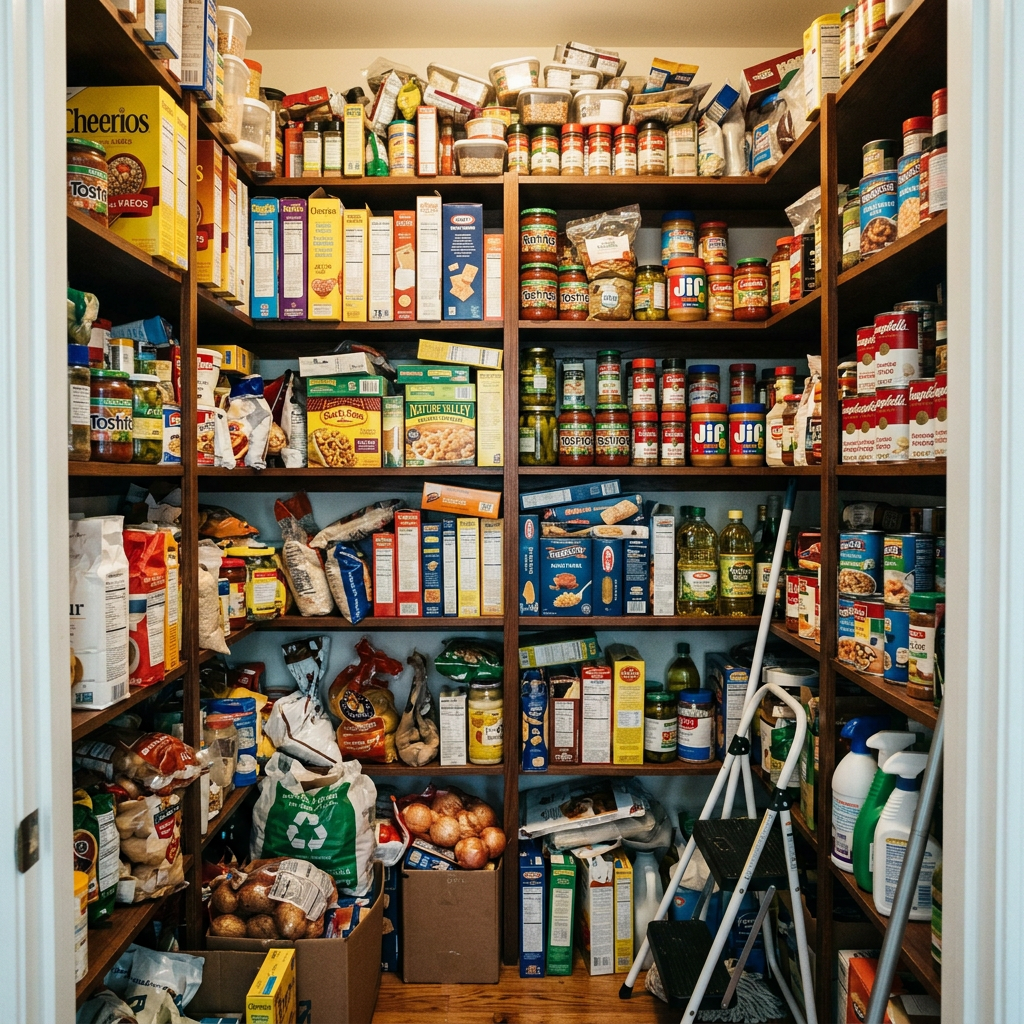
    Shelves of pantry stocked with cereals, jars, canned goods, and cleaning supplies

    Before you start buying baskets and bins, take a little time to set yourself up for success. A few simple prep steps will help you create a pantry that’s both beautiful and functional—and save you from purchasing organizers you don’t actually need.

    1. Empty Everything

    Take everything out of your pantry so you can see exactly what you have. It may seem like extra work, but starting with a blank slate makes it much easier to create a system that lasts.

    2. Check Expiration Dates

    Now is the perfect time to toss expired foods, donate unopened items your family won’t eat, and combine duplicate products. You’ll free up valuable shelf space before you even begin organizing.

    3. Clean the Shelves

    Wipe down shelves, vacuum out crumbs, and clean sticky containers before putting anything back. Starting with a fresh, clean pantry makes the finished result feel even more rewarding.

    4. Group Similar Items Together

    Sort foods into categories like baking supplies, canned goods, snacks, breakfast items, pasta, rice, spices, and drinks. You may even want to create activity-based zones for things like school lunches, taco night, or quick breakfasts.

    5. Measure Before You Shop

    This is the step that’s easiest to skip—but it can save you money. Measure the height, width, and depth of your shelves before ordering bins, turntables, or drawer organizers. A few quick measurements can prevent the frustration of buying organizers that don’t fit.

    6. Organize for Your Lifestyle

    Pinterest-perfect pantries are beautiful, but the best pantry is one that works for your family. Place everyday foods where they’re easiest to reach, keep kids’ snacks at their level if appropriate, and don’t feel like you have to decant every single item. Build a system that makes your daily routine easier—not one that’s difficult to maintain.

    *Pro Tip: Resist the urge to buy organizers before you declutter. Once you know exactly what you’re storing, you’ll be able to choose storage solutions that fit your space instead of trying to make your pantry fit the organizers.

    *Many of these organization products are favorites that I’ll be linking in my storefront, so you can easily recreate the look and functionality in your own home. Clever Pantry Organization Storefront Here

    *This post contains an affiliate link. As an Amazon Associate, I earn from qualifying purchases. This means that if you click on a link and make a purchase, I may receive a small commission at no additional cost to you. I only recommend products I genuinely love, use, or believe will add value to your home and wellness journey. Thank you for supporting my work! 


    Walk-In Pantry Organization Ideas
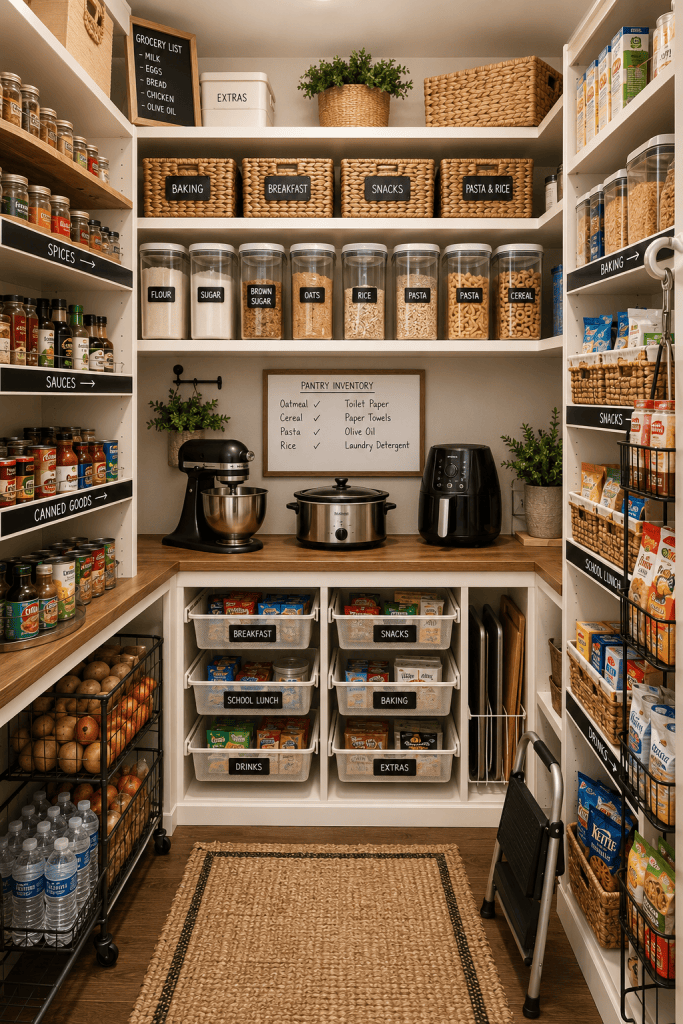
    If you’re lucky enough to have a walk-in pantry, the goal isn’t simply filling the shelves—it’s making every inch work smarter.

    1. Create Activity Zones

    Instead of organizing by food type, organize by what you actually do. Create dedicated stations for baking, school lunches, breakfast, snacks, or weeknight dinners. Everything you need stays together, making meal prep much faster.

    2. Add Lazy Susans to Corners

    Corner shelves love to hide things forever. Large turntables make oils, sauces, canned goods, and spices easy to reach with one quick spin.

    3. Build a Countertop Appliance Zone

    Reserve one extra-deep shelf around waist height for bulky appliances like mixers, slow cookers, or air fryers. They’re hidden away but still easy to grab.

    4. Store Heavy Items Down Low

    Large rolling wire baskets are perfect for potatoes, onions, bottled water, cooking oils, and bulk purchases. Your back will thank you.

    5. Decant Dry Goods

    Matching glass or clear containers instantly make a pantry feel organized while letting you see exactly when flour, cereal, sugar, or pasta are running low.

    6. Use Chalkboard Shelf Labels

    Paint the front edge of wooden shelves with chalkboard paint or use removable chalkboard labels so your zones can easily change as your grocery habits do.

    7. Double Your Shelf Space

    Under-shelf wire baskets make use of the empty air between shelves—perfect for tortillas, napkins, snack bags, or baking supplies.

    8. Stock Like a Grocery Store

    Place backup items directly behind the one currently being used. When the front item is empty, simply pull the next one forward.

    9. Keep a Step Stool Inside

    Hang a folding step stool on a wall hook so those top shelves become usable storage instead of wasted space.

    10. Hang an Inventory Board

    A simple dry-erase board helps everyone remember what needs replacing before the next grocery trip.

    *Clever Pantry Organization Storefront Here


    Closet Pantry Organization Ideas
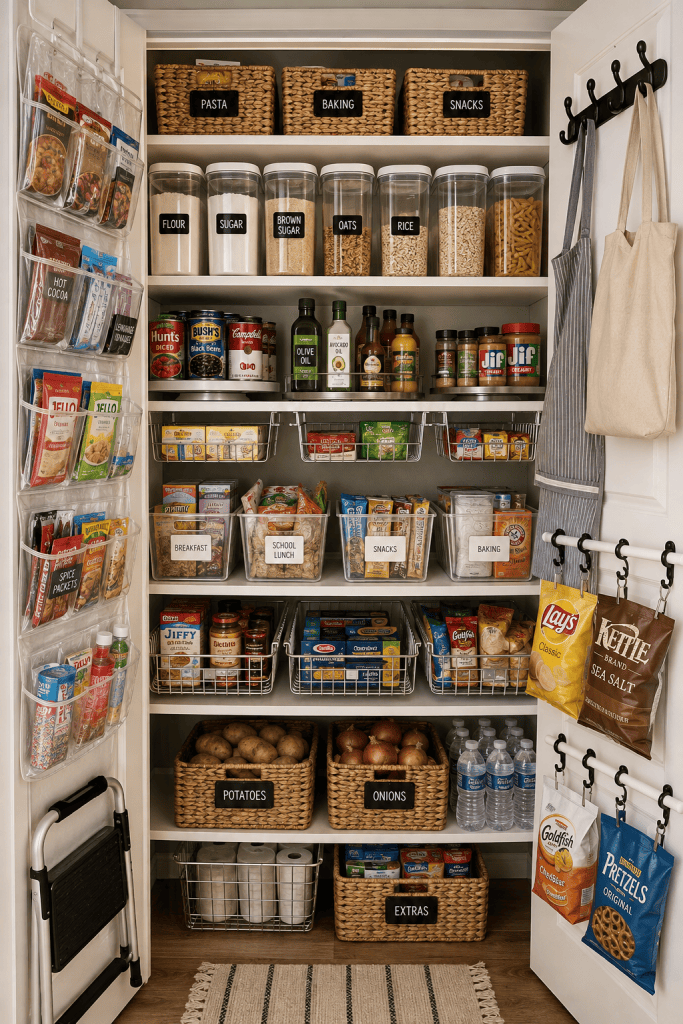
    Closet pantries may be narrow, but they can hold an incredible amount with the right storage solutions.

    11. Turn Your Door Into Storage

    An over-the-door clear pocket organizer isn’t just for shoes. It’s perfect for seasoning packets, drink mixes, snacks, juice boxes, and baking decorations.

    12. Organize Wraps with Magazine Holders

    Office magazine files turned on their sides create tidy homes for aluminum foil, parchment paper, and plastic wrap.

    13. Store Baking Sheets Vertically

    Tension rods placed between shelves create custom dividers that keep cutting boards, trays, and baking sheets standing upright.

    14. Hang Open Snack Bags

    Install a small towel bar on the inside of the pantry door and use curtain ring clips to hang partially opened snack bags.

    15. Add Tiered Shelf Risers

    Raise the back row of canned goods or spices so nothing gets forgotten behind taller items.

    16. Upgrade to Pull-Out Drawers

    Sliding wire drawers eliminate the dreaded “black hole” in the back of deep shelves.

    17. Simplify with Matching Bins

    Uniform storage bins instantly reduce visual clutter while keeping snacks, breakfast foods, or baking supplies grouped together.

    18. Use Every Inch of the Door

    Command hooks can hold aprons, reusable grocery bags, oven mitts, or measuring cups without taking up shelf space.

    19. Label the Shelf—Not the Bin

    Label holders attached directly to shelf edges make it easy for everyone to return items where they belong.

    20. Give Everyday Foods Prime Real Estate

    Store frequently used ingredients between chest and eye level, while seasonal or rarely used items live on the highest and lowest shelves.

    *Clever Pantry Organization Storefront Here


    Small Cupboard Pantry Organization Ideas
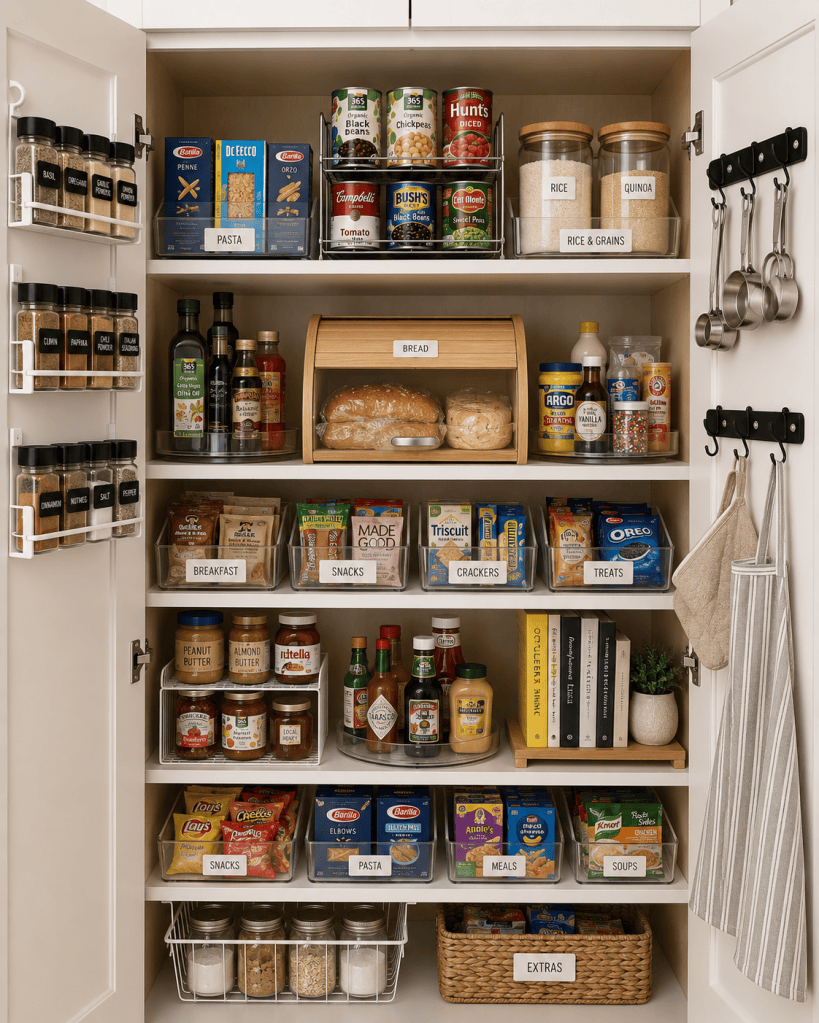
    Even a single cabinet can become surprisingly functional with a few smart tricks.

    21. Use Pull-Out Acrylic Trays

    Deep acrylic trays slide out like drawers, making everything in the back instantly visible.

    22. Install Stackable Can Dispensers

    Gravity-fed can organizers automatically roll the next can forward, keeping shelves neat while making inventory easy.

    23. Add Under-Shelf Jar Storage

    Install simple jar tracks beneath shelves to slide mason jars underneath, creating bonus storage without sacrificing shelf space.

    24. Mount Spice Shelves on Cabinet Doors

    The inside of cabinet doors is valuable real estate. Shallow spice racks keep seasonings visible without cluttering shelves.

    25. Try the Bread Box Trick

    Store bread, buns, and tortillas inside a dedicated bread box placed within the cabinet to prevent crushed loaves and messy packaging.

    26. Spin Your Baking Supplies

    A small Lazy Susan makes sprinkles, food coloring, vanilla extract, and decorating supplies easy to access.

    27. Create an Instant Half Shelf

    A simple horizontal tension rod can divide tall shelves into two useful storage levels without any permanent installation.

    28. Set a Snack Limit

    Designate one bin for individually packaged snacks. If the bin is full, it’s time to enjoy what you have before buying more.

    29. Stack Cookbooks Sideways

    Horizontal cookbook stacks create an elevated platform for small jars, oils, or condiments while making use of awkward cabinet height.

    30. Add Pegboard to the Back Wall

    Pegboard turns unused cabinet walls into adjustable storage for measuring cups, spoons, small baskets, and kitchen tools.

    *Clever Pantry Organization Storefront Here


    Frequently Asked Questions
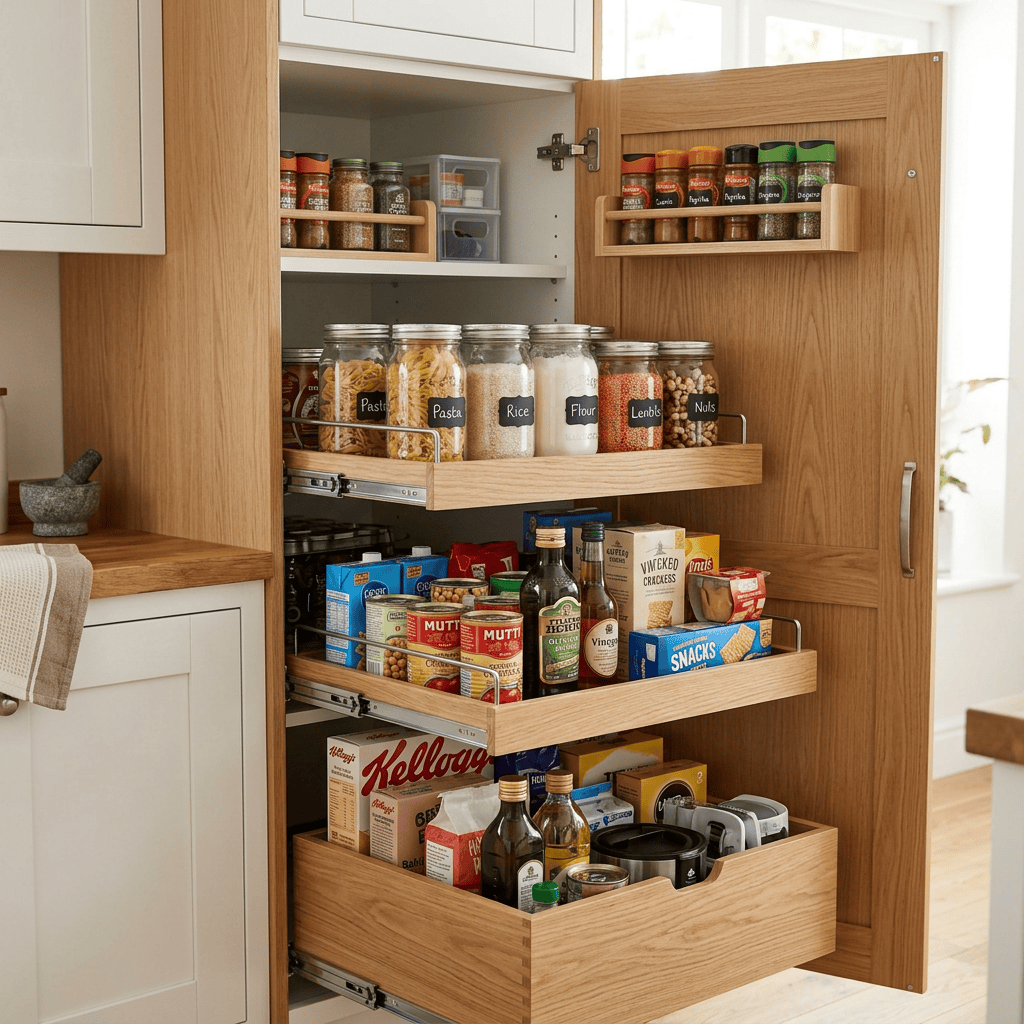
    Open kitchen pantry with labeled jars containing pasta, rice, flour, lentils, and nuts on pull-out shelves

    What is the best way to organize a pantry?

    The best pantry organization system is one you’ll actually maintain. Start by grouping similar items together, then create zones based on how your family uses the kitchen. Keep everyday essentials at eye level, store heavier items on lower shelves, and use clear containers or labels so everything has a designated home.

    Should I store pantry food in clear containers?

    Clear containers aren’t required, but they can make a huge difference. They reduce visual clutter, help keep dry goods fresher, and let you see when you’re running low on staples like flour, sugar, rice, cereal, and pasta. If you’re on a budget, start with the items you use most often and add more containers over time.

    How do I organize a small pantry with very little space?

    When space is limited, think vertically. Use door organizers, shelf risers, stackable bins, Lazy Susans, pull-out trays, and under-shelf baskets to maximize every inch. Keeping only what your family regularly uses also helps prevent overcrowding.

    What should not be stored in a pantry?

    Avoid storing foods that require refrigeration after opening or ingredients that are sensitive to heat and humidity. Items like cooking oils, spices, nuts, and whole-grain flours also last longer when kept away from direct sunlight and excessive heat. Always check the manufacturer’s storage recommendations for specific products.

    How often should I reorganize my pantry?

    A quick reset once a month is usually enough to keep things under control. Toss expired items, wipe down shelves, combine duplicate products, and move older items to the front so they’re used first. A deeper clean every three to six months helps keep your pantry organized year-round.

    Are pantry labels really worth it?

    Yes! Labels help everyone in the household know exactly where items belong, making it much easier to keep your pantry organized. Whether you use printed labels, chalkboard labels, or simple handwritten tags, labeling creates a system that’s easy to maintain.

    What’s the best way to organize canned goods?

    Store canned goods together using shelf risers or stackable can organizers so every label is visible. Keep similar items—such as vegetables, soups, beans, and tomatoes—in their own sections, and place newer cans behind older ones to use the oldest items first.

    How can I make my pantry look more organized without spending a lot of money?

    You don’t have to buy expensive organizers to create a beautiful pantry. Start by decluttering, matching similar baskets or bins, removing excess packaging, labeling shelves, and using affordable storage solutions from discount stores. Even a few simple changes can make your pantry look cleaner and function much better.


    Final Thoughts

    The best pantry isn’t necessarily the biggest one—it’s the one that works for your everyday life.

    Whether you’re organizing a spacious walk-in pantry, making the most of a narrow closet pantry, or maximizing one small kitchen cupboard, these ideas can help you create a space that’s easier to maintain and far less stressful to use.

    Remember, pantry organization doesn’t have to happen all at once. Start with one shelf, one basket, or one storage solution. Small changes add up quickly, and before you know it, your pantry will feel more functional, more organized, and maybe even one of your favorite spaces.

    Happy organizing!
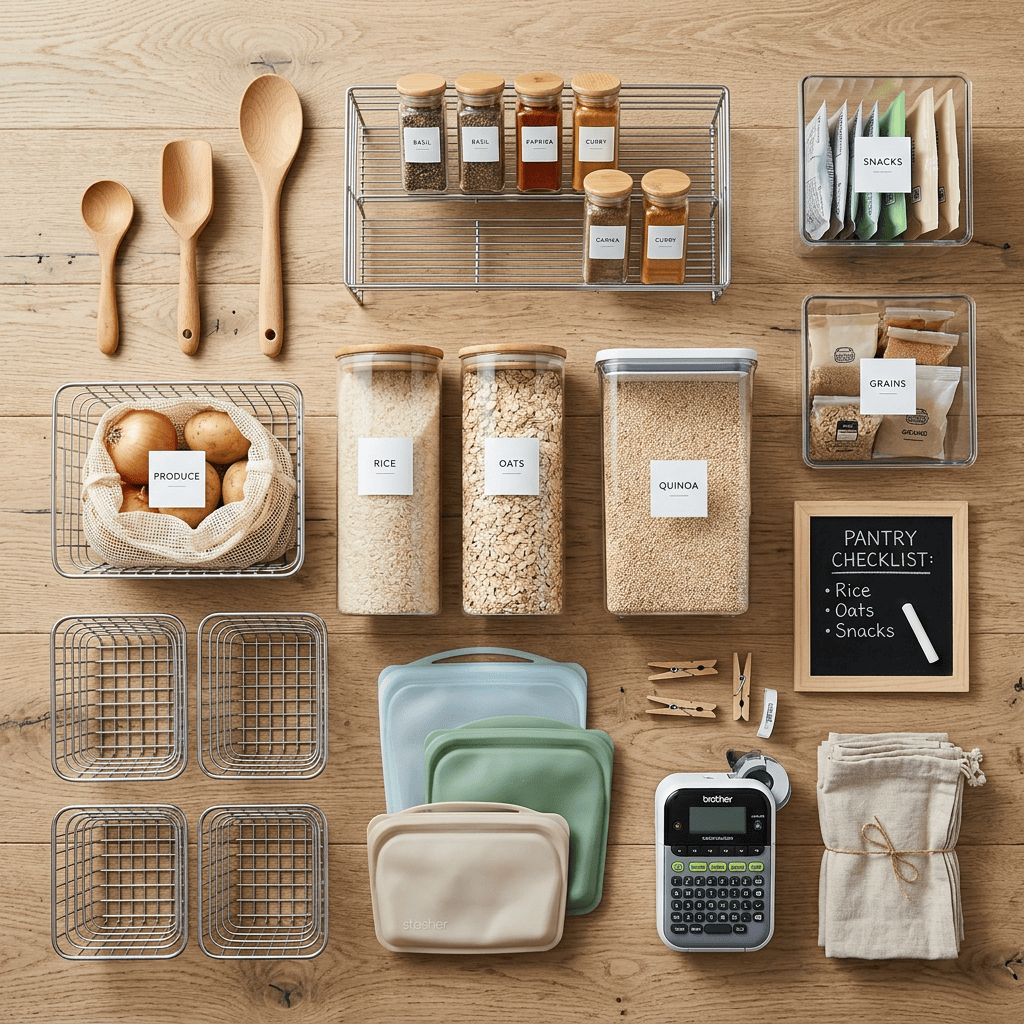
    Labeled pantry containers with rice, oats, quinoa, spices, produce, snacks, grains, and storage items
  • Heirloom Furniture: Bringing Back the Hope Chest (A Beautiful Tradition Worth Reviving)

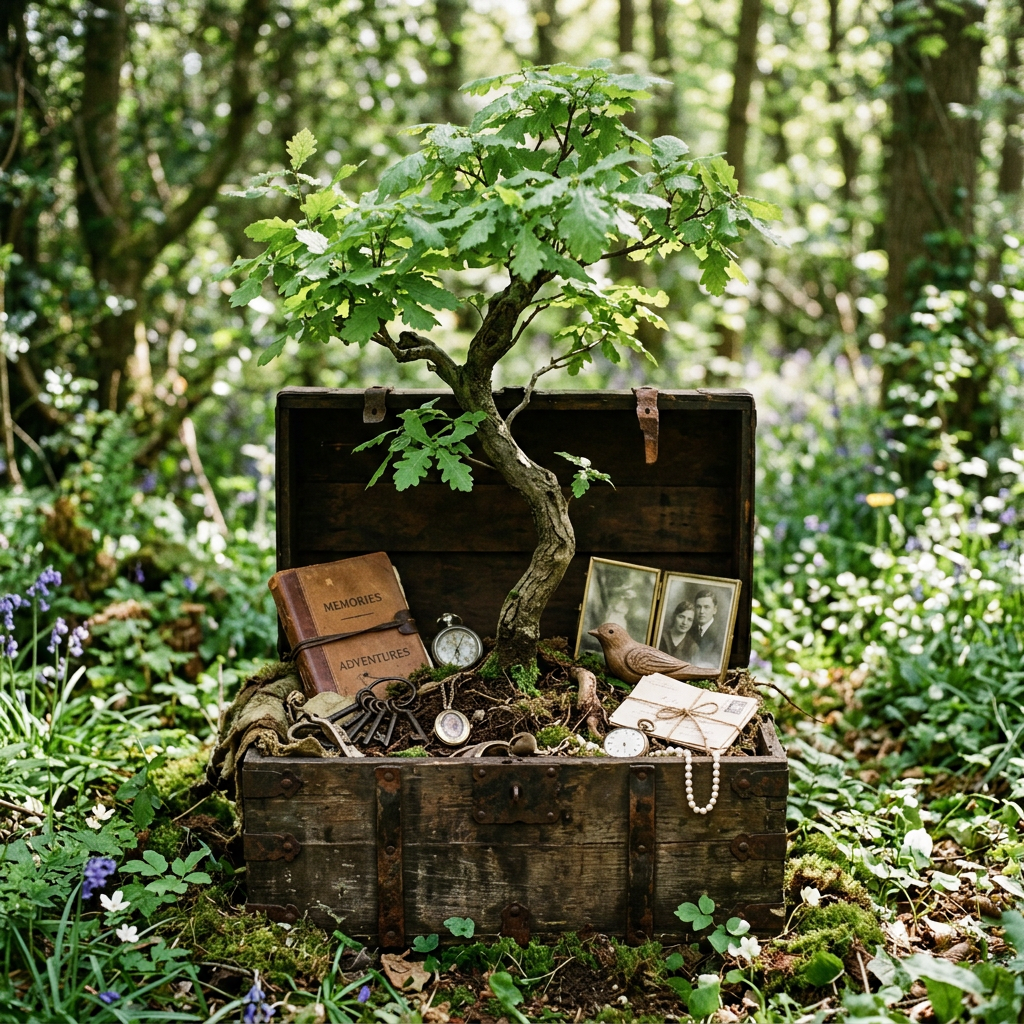
    Open wooden chest with bonsai tree, vintage photos, books, keys, pocket watches, and letters in forest setting

    As I was cleaning out my daughter’s room recently, I found myself smiling at the little treasures tucked into every corner.

    A favorite book with a worn spine. Tiny baby shoes I couldn’t bear to part with. Birthday cards. Vacation souvenirs. A carefully curated rock collection that somehow felt incredibly important. The kinds of things that don’t belong in a junk drawer but don’t quite have a home, either.

    It reminded me of my grandmother’s hope chest.

    I remember it sitting quietly in her bedroom—a beautiful cedar chest that seemed almost magical. It held quilts stitched by hand, family keepsakes, old photographs, and pieces of a life lovingly preserved. As a child, I had no idea it represented a centuries-old tradition. I just knew it felt special.

    It made me wonder…

    Why don’t we have hope chests anymore?

    And perhaps more importantly—should we bring them back?


    What Is a Hope Chest?

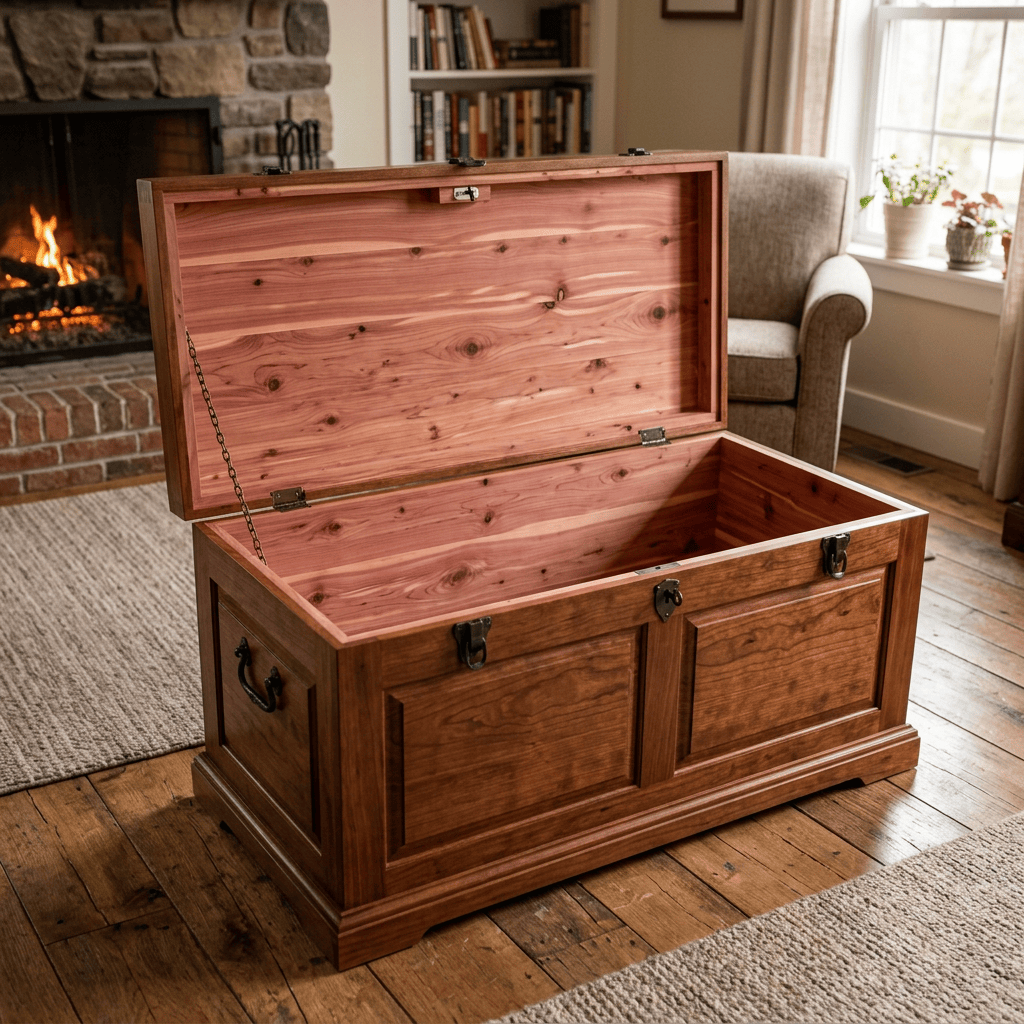
    Open wooden storage chest with cedar interior in living room.

    Traditionally, a hope chest was a large wooden trunk, often cedar-lined, gifted to a young woman as she approached adulthood. Over the years, she would slowly fill it with items she would need for her future home: linens, quilts, dishes, handmade embroidery, family heirlooms, and practical household essentials.

    It wasn’t simply furniture.

    It was preparation.

    It represented hope, anticipation, responsibility, and the quiet confidence that one day a new chapter would begin.

    Long before online registries and next-day shipping, families spent years collecting quality pieces that would last a lifetime. Grandmothers embroidered pillowcases. Mothers tucked away recipes. Relatives added silverware, blankets, and cherished family treasures.

    The chest slowly became a collection of love.


    A Tradition That Spans Centuries

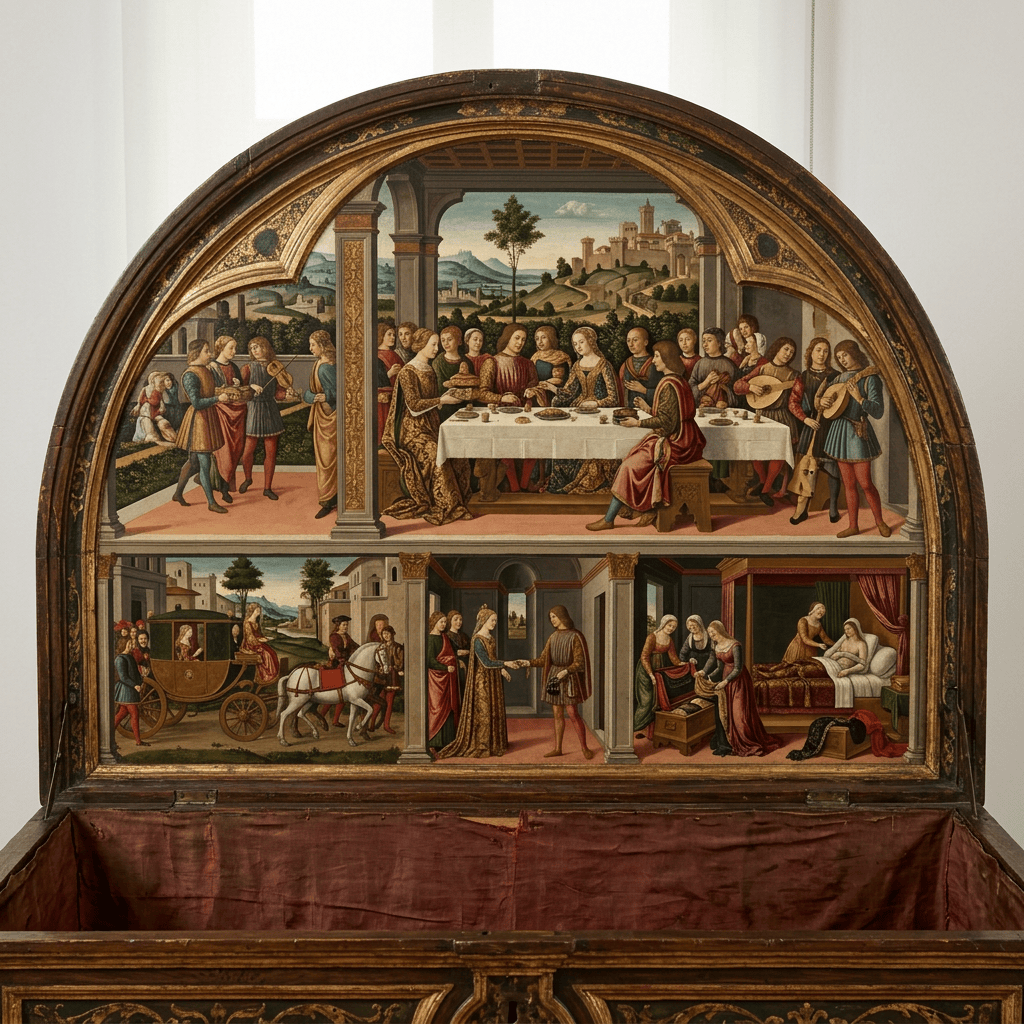
    Renaissance chest lid with detailed paintings of a wedding feast, procession, and intimate scenes

    The idea actually dates back to Renaissance Italy, where ornate wedding chests—called cassoni—held a bride’s valuables and dowry. As European families immigrated to America, they brought the tradition with them, where hope chests eventually became a familiar part of many homes. Depending on where you lived, they were also known as dowry chests, bride boxes, glory boxes, or even simply “the bottom drawer.”

    While the original purpose centered around marriage, the heart behind the tradition was always much bigger.

    It was about preparing someone for the future.


    Why They Feel So Meaningful

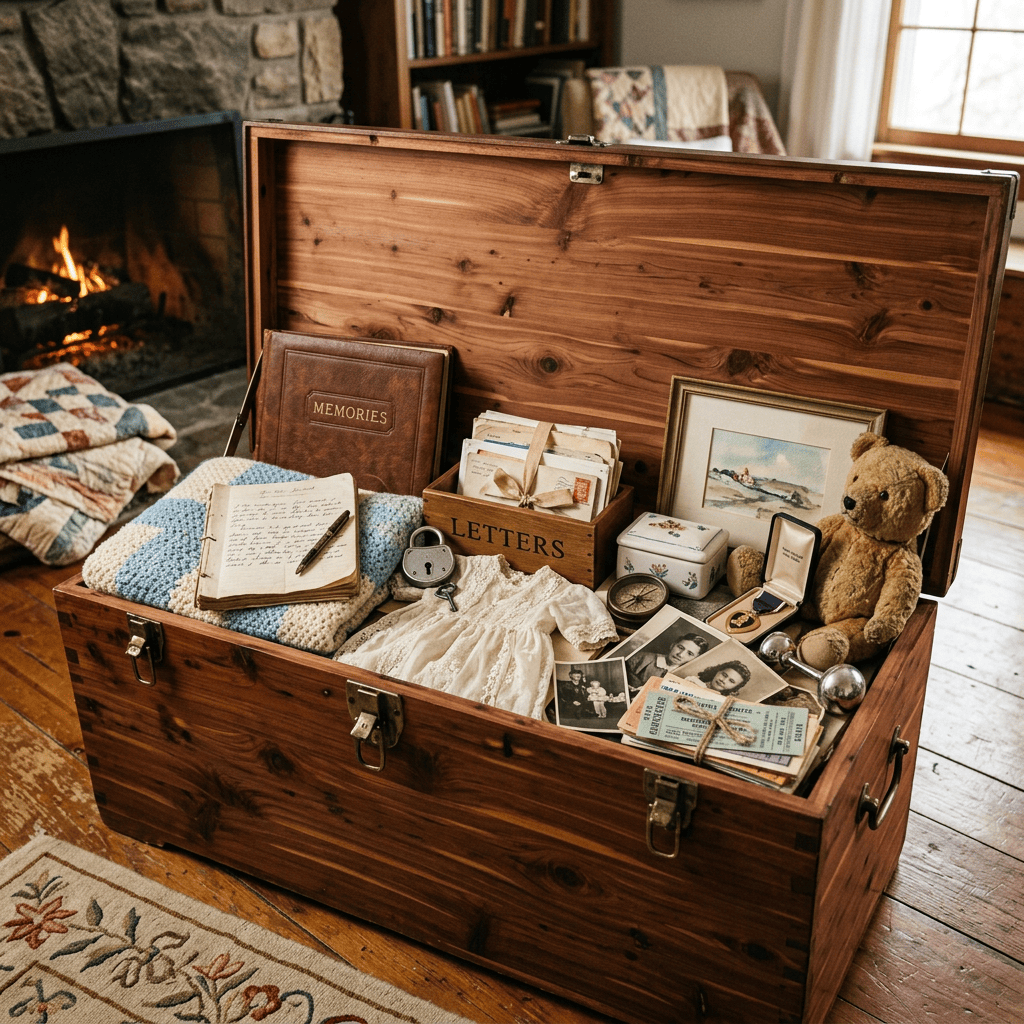
    Wooden chest filled with photo albums, letters, old photographs, a teddy bear, and personal keepsakes

    Perhaps what makes a hope chest so beautiful isn’t what’s inside it.

    It’s what it represents.

    Every object tells a story.

    Every blanket was chosen with care.

    Every handwritten recipe carries memories of family dinners.

    Every letter holds words someone hoped would still matter years later.

    A hope chest becomes a physical timeline—a bridge connecting childhood, adulthood, and future generations. It’s a place where ordinary objects become extraordinary simply because of the memories attached to them.

    In a world where so much is digital, disposable, and fast, there’s something profoundly comforting about having one place dedicated to preserving the things that matter most.


    Maybe We’ve Been Looking at Hope Chests the Wrong Way

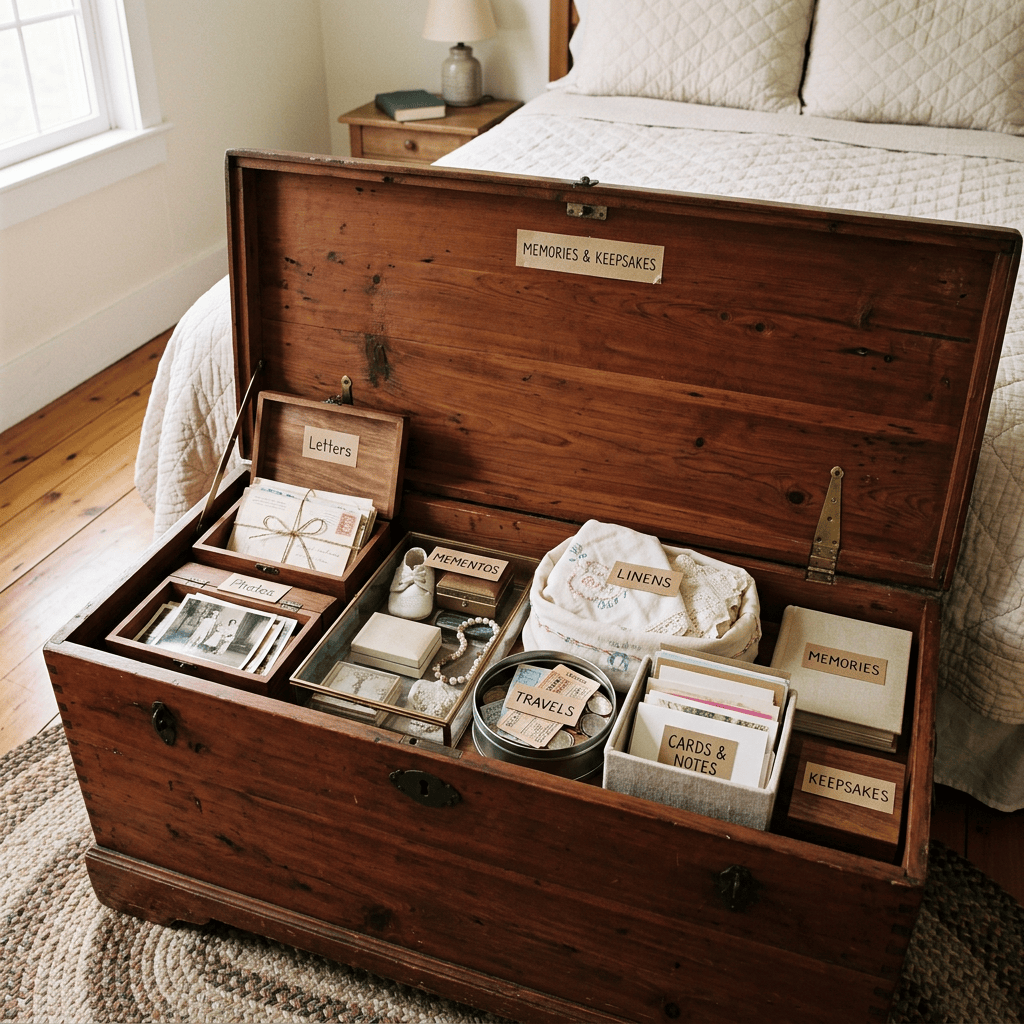
    Hope chest with organized keepsakes and containers

    One reason hope chests quietly disappeared is because society changed.

    Women no longer needed to spend years preparing for marriage in the same way, and thankfully, our understanding of adulthood has become much broader than one expected life path.

    But perhaps we threw away the tradition when we only needed to update its purpose.

    A modern hope chest doesn’t have to prepare someone for marriage.

    It can prepare them for life.

    Imagine gifting one to a teenager before graduation.

    Instead of embroidered linens, you slowly fill it with quality kitchen tools, soft towels, a cast iron skillet, favorite family recipes, a basic toolkit, first-aid supplies, and the practical things they’ll actually need when they leave home.

    Mixed among those practical items are the sentimental ones.

    Letters to open during hard seasons. (“open when…”)

    A beloved childhood book.

    Photos from family vacations.

    A favorite stuffed animal.

    The varsity jacket they can’t imagine giving away.

    Suddenly, it’s no longer just storage.

    It’s a launch kit for adulthood, tethered to a touchstone of family history.

    One of my favorite things to tuck inside a hope chest is a collection of handwritten letters. Years from now, those words may become one of the most treasured items in the entire chest. If you’re looking for ideas, I shared dozens in my article on “The Lost Art of Letter Writing: A Simple Way to Feel More Connected.”


    It Doesn’t Even Have to Be for a Teenager

    One of my favorite things about reviving this tradition is that there are no rules anymore.

    A hope chest can become a baby’s keepsake box, preserving hospital bracelets, first shoes, favorite books, artwork, and birthday cards.

    It can become a family memory chest, holding heirloom ornaments, handwritten recipes, and treasured photographs.

    It can store travel journals and souvenirs collected over decades.

    Or it can simply become the beautiful cedar chest at the foot of your bed that quietly protects quilts, blankets, and family treasures while adding warmth to your home.

    The purpose is no longer prescribed.

    You get to decide what hope looks like.


    The Practical Beauty of a Hope Chest

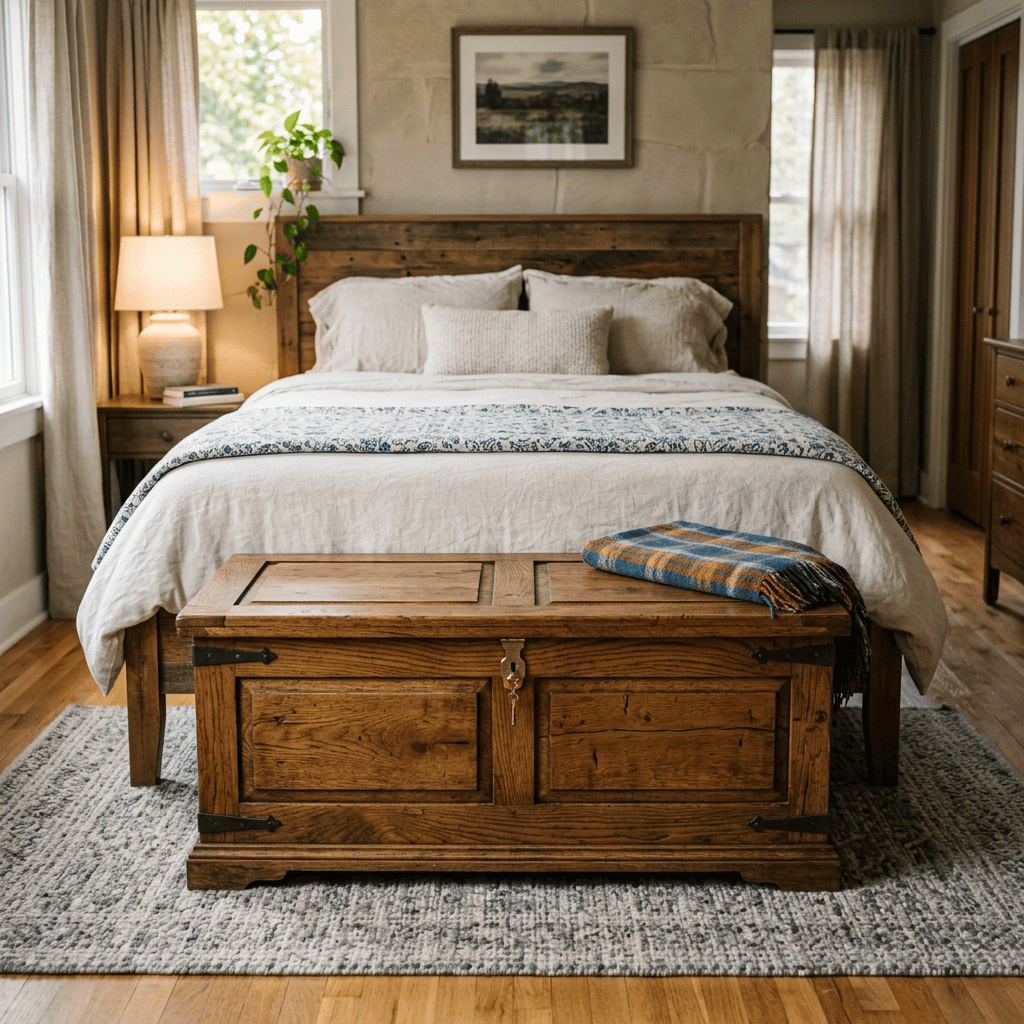
    Bedroom with wooden bed, beige bedding, wooden chest with plaid blanket, bedside lamp, and houseplant

    Part of what made these chests so beloved wasn’t just sentimentality—they were incredibly practical.

    Many were built from solid hardwood and lined with aromatic cedar, which naturally helped protect fabrics from insects while allowing the chest to last for generations. Some even included locking compartments for letters, jewelry, or treasured keepsakes.

    Unlike many storage pieces today, these weren’t designed for the next move or the next decorating trend.

    They were built to become family heirlooms.

    Furniture that stayed.

    Furniture that gathered stories.

    Furniture that outlived us.


    A Beautiful Gift at Just the Right Time

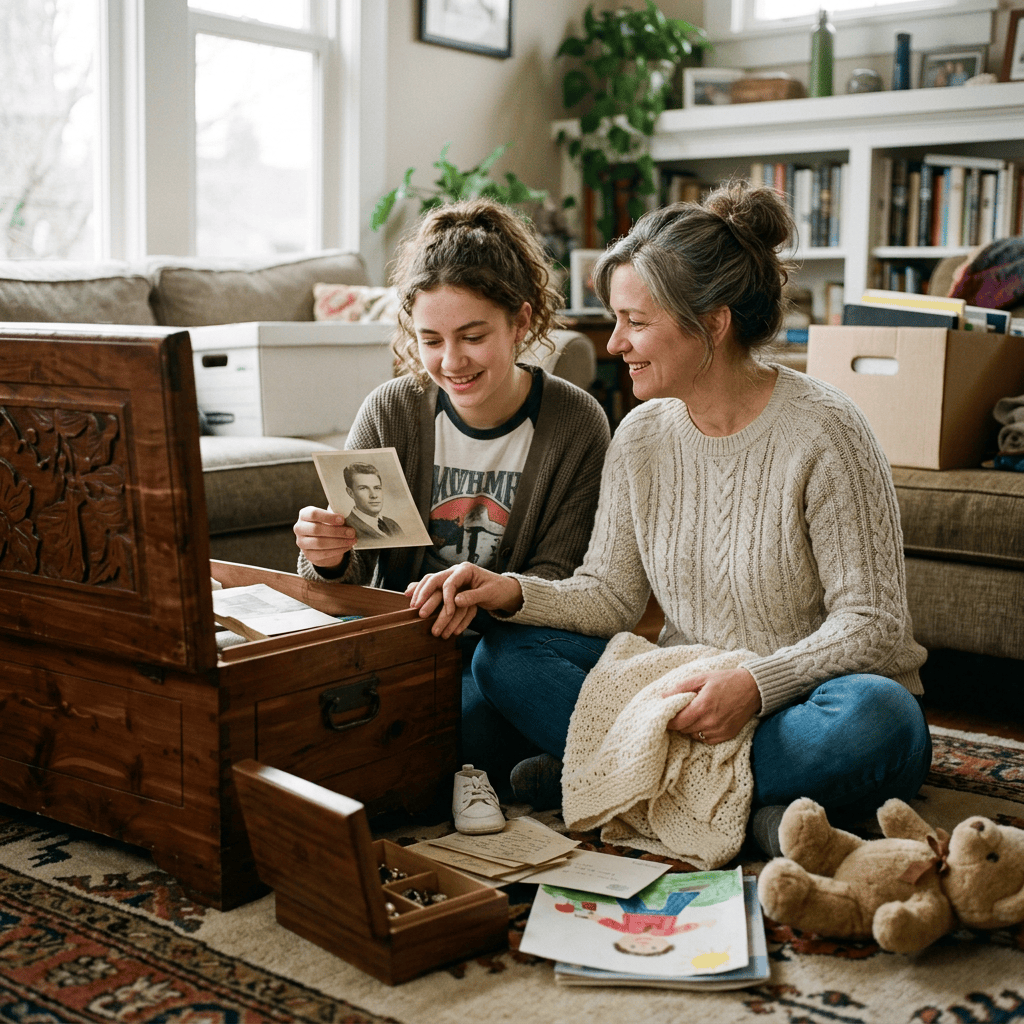
    Mom and teen organizing hope chest keepsakes

    If you’re considering starting this tradition, the sweet spot is often between ages sixteen and eighteen.

    Those years are filled with anticipation. Graduation is approaching. Independence is becoming real. Life feels wonderfully uncertain.

    A hope chest offers something surprisingly grounding during that season.

    It says:

    “You don’t have to figure everything out today.”

    “We’ll prepare together.”

    “Every birthday, every Christmas, every milestone, we’ll slowly fill this with the things you’ll need.”

    Instead of overwhelming adulthood arriving all at once, it becomes something you build toward, one thoughtful gift at a time.

    Special Letter Template:

    Here is a sample letter template designed to be given to a teenager alongside a hope chest. (In case you need some inspiration) (best handwritten)

    Dear [Name],

    There is a strange, quiet ache in watching someone you love grow up. As a parent, my greatest joy has been witnessing the person you are becoming, but it comes with the difficult realization that I cannot freeze time. I look at you now and see both the child who used to reach for my hand and the independent young adult who is preparing to step out into a vast world. Life moves in profound phases, and right now, you are standing on the threshold of your own beginning.

    To mark this transition, I am giving you this chest.

    Historically, these were called hope chests, given to young people to collect the practical tools they would need to build a future home. Generations ago, they were filled with hand-woven linens and tableware, saved in anticipation of a specific, traditional life path.

    But our world looks different now, and my hopes for you are vastly wider.

    I want you to think of this chest not as a rigid tradition, but as a modern container for your independence, your dreams, and your resilience. It is a physical anchor for your journey. As you navigate the next few years, you will fill it with the essentials of adulthood—perhaps tools for your first apartment, books that change your perspective, or utensils for a kitchen that is entirely your own. But more importantly, I hope you fill it with the invisible things: your courage, your values, and the memories of where you came from.

    The wood of this chest is strong, built to endure time and protect whatever is kept safe inside its walls. Let it remind you of your own foundation. No matter how far you travel, how challenging the world becomes, or how many times your life plans change, you carry a baseline of strength and love that cannot be shaken.

    Inside this chest, you will find a few first pieces to start your collection. But the space left open belongs entirely to your future. Step forward boldly, know that it is a beautiful privilege to watch you grow, and never forget that no matter how independent you become, you will always have a home here with me/us.

    With all my love and hope,

    [Parent/s Name]


    If this idea has you dreaming about starting a hope chest of your own, or gifting one to a loved one, I’ve put together a carefully curated collection of quality pieces for every budget that fit the spirit of this tradition. Whether you’re looking for the perfect cedar chest or storage options for keepsakes, you’ll find some of my favorite recommendations *in my storefront.

    *As an Amazon Affiliate, I may earn from qualifying purchases at no additional cost to you, thank you for supporting my work!


    Maybe What We Really Miss Is the Slowness

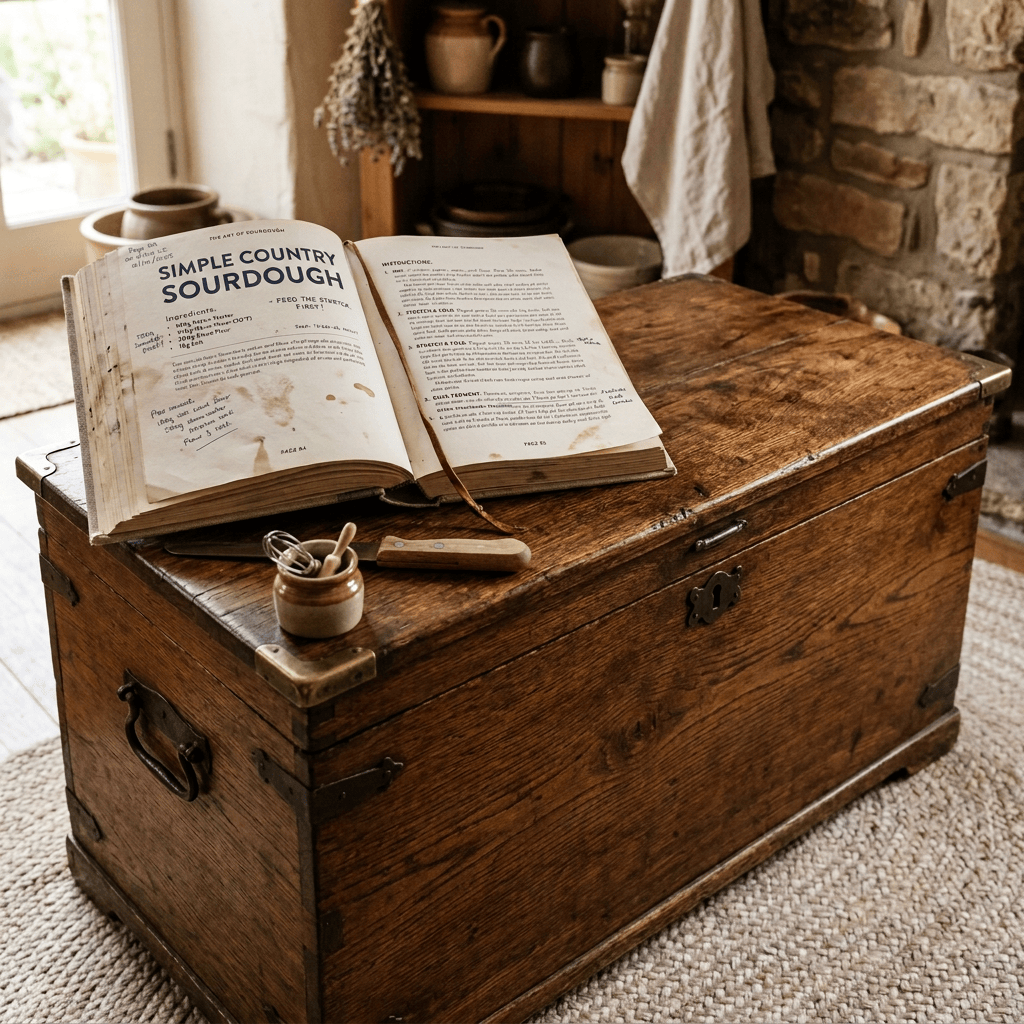
    Open book with sourdough bread recipes on a wooden chest with kitchen utensils

    I wonder if the revival of cottagecore, grandmacore, heirloom gardening, handmade quilts, sourdough, and slow living all point toward the same longing.

    We’re craving rituals again.

    We want traditions that connect generations instead of disappearing between them.

    We want objects that mean something.

    A hope chest asks us to slow down.

    To choose quality over quantity.

    To save instead of replace.

    To pass down instead of throw away.

    To intentionally prepare the people we love—not just with things, but with wisdom, encouragement, family history, and hope.


    A Tradition Worth Keeping Alive

    Maybe that’s why this old tradition still feels so beautiful.

    Not because we need to return to the past.

    But because some traditions deserve to evolve rather than disappear.

    A hope chest isn’t really about marriage.

    It isn’t even about furniture.

    It’s about creating a place where love is collected over time.

    Where memories are protected.

    Where practical gifts meet heartfelt ones.

    Where a young person can begin adulthood knowing they carry a little piece of home with them wherever life leads.

    And perhaps that’s something every generation still needs.

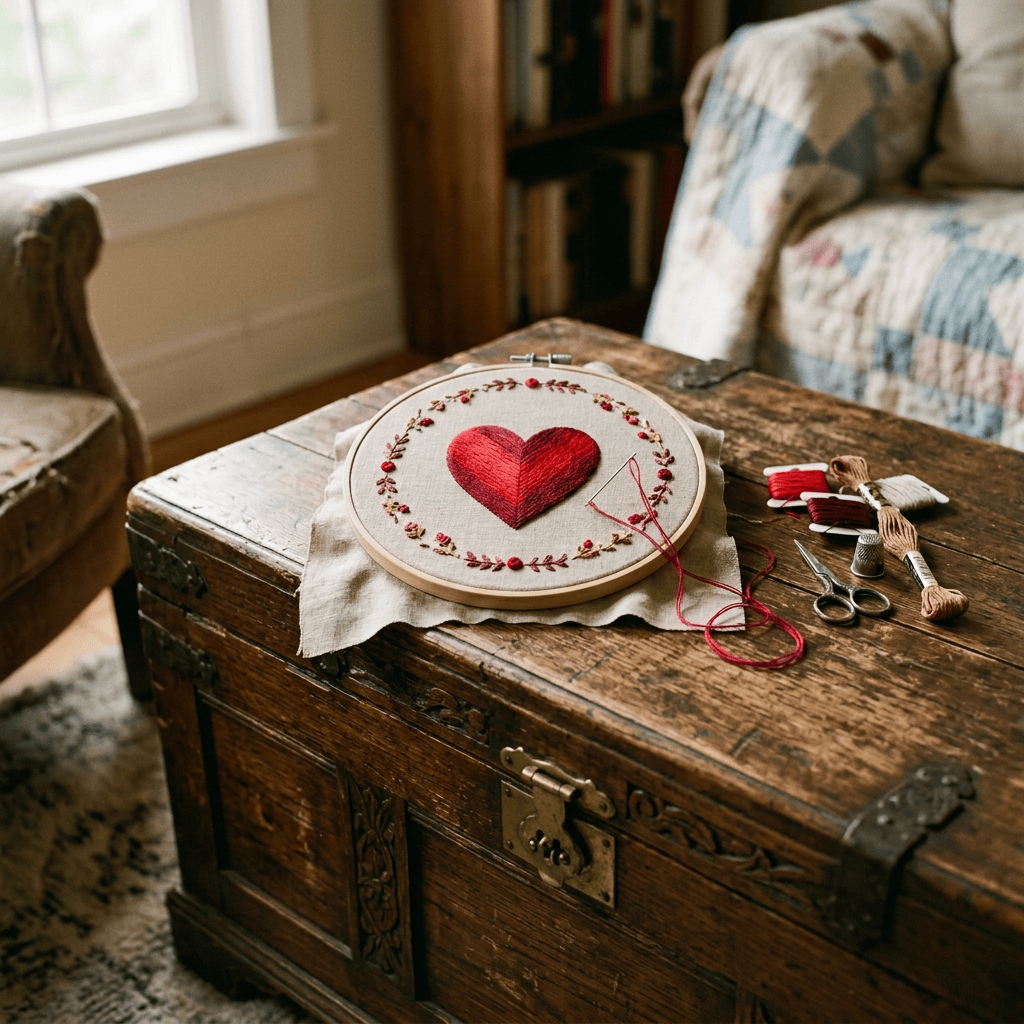
    Embroidery hoop with a stitched anatomical heart surrounded by floral designs on fabric